
Economists Warn Jewish Terror and Settlements Will Harm Israel's Economy
Translated & summarized from Globes by baba
A forum of senior Israeli economists warned that Jewish terrorism and settlement expansion, particularly in E1, could lead to significant macroeconomic damage for Israel. They cited potential European sanctions, a rising cost of living, and business difficulties, noting that the UK, Netherlands, France, and Canada are considering or implementing import bans and sanctions. The economists urged immediate action to prevent further diplomatic and economic isolation, stating that all citizens will pay the price.
The story in 6 lines · by baba
- Senior Israeli economists warn Jewish terror and settlement expansion could cause significant macroeconomic damage.
- Potential European sanctions, including import bans and financial restrictions, are a major concern.
- The economists cited actions by the UK, Netherlands, France, Canada, and US senators.
- The UN has expanded its blacklist of companies linked to settlements.
- Sanctions could lead to a substantial increase in the cost of living for all Israelis.
- Failure to prevent Jewish violence against Palestinians is causing diplomatic damage and isolation.
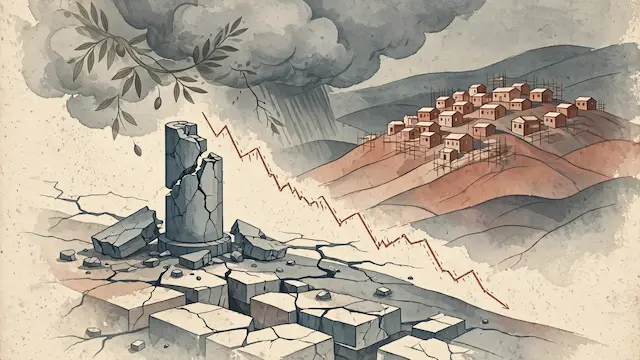
A group of senior Israeli economists has issued a stark warning about the significant macroeconomic damage that could be inflicted upon Israel's economy due to escalating Jewish terrorism and settlement expansion, particularly in the E1 area east of Jerusalem. The economists, comprising former public sector and academic figures, highlighted the potential for European sanctions, increased cost of living, and difficulties in conducting business within Israel.
They cited recent announcements from the UK regarding a ban on imports from settlements and potential sanctions on companies involved in their construction and financing. Similar measures are being implemented or considered by the Netherlands, France, and Canada. In the United States, Democratic senators have proposed legislation targeting those involved in construction in E1. The United Nations has also expanded its blacklist of companies linked to settlements, including major Israeli banks and the food producer Tnuva.
The economists expressed grave concern over a significant deterioration in economic relations between Israel and Europe, which could lead to substantial macroeconomic harm. They warned that sanctions might expand beyond physical products to encompass credit, payment, insurance, and supply chain systems deeply integrated into the Israeli economy. Furthermore, they cautioned of a "chilling effect" where international banks, retailers, and multinational corporations might reduce ties with Israeli firms to avoid legal and regulatory risks, even if those firms are not directly involved with settlements.
Beyond the impact on business, the signatories anticipate a considerable rise in the cost of living, a pattern observed internationally following sanctions. They noted that while Israel already faces cost of living challenges, sanctions would exacerbate the situation significantly. The economists concluded that the expansion of West Bank settlements and the failure to prevent Jewish violence against Palestinians are causing diplomatic damage, international isolation, and a heavy economic price that all Israeli citizens will bear, urging immediate action to prevent further harm.
Mentioned




