
Israel's Housing Market Sees Falling Prices Amid Rising Rents
Translated & summarized from Bizportal by baba
Israel's housing market faces a surplus of 86,300 unsold new apartments, leading to price drops and increased developer incentives. Despite falling purchase prices, rental costs are rising as potential buyers delay homeownership and remain in the rental market. This trend is exacerbated by a slowdown in population growth and cautious household debt. Experts predict continued rental price increases and stable interest rates for the foreseeable future.
The story in 6 lines · by baba
- Israel has 86,300 unsold new apartments, a surplus equivalent to over two years of sales.
- Housing prices are falling, with experts estimating actual drops of 10-20%, but rental prices are increasing.
- Potential homebuyers delaying purchases are increasing demand in the rental market.
- Developers are offering significant financing incentives to attract buyers amid weak demand.
- Net cash flow from sales for developers has dropped by 58% year-over-year.
- Interest rates are expected to remain stable until late 2027, according to expert forecasts.
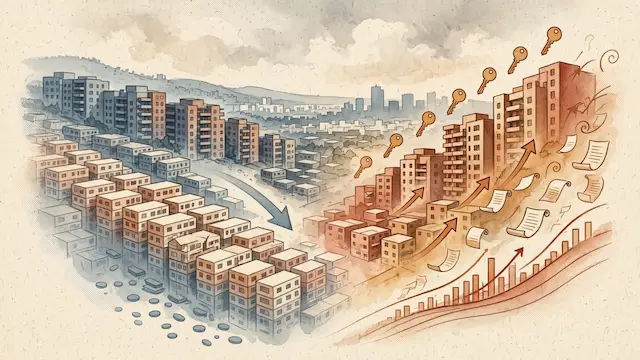
Israel's new housing inventory has reached 86,300 unsold units as of August, with approximately 700 added in the past month alone. This growing surplus, equivalent to over two years of current sales pace, comes despite a slight recovery in sales. While official figures show a 1.8% decrease in housing prices over the last year, experts suggest actual price drops could be as high as 10-20%, particularly in central Israel, due to significant discounts and incentives offered by developers. However, this downturn in purchase prices is creating a paradoxical situation where rental prices are increasing.
As potential buyers postpone purchases, waiting for further price reductions, they remain in the rental market, thereby boosting demand for rentals. This sustained demand, coupled with an increase in foreign workers, is predicted by experts at Leader to drive rental costs higher. Consequently, individuals delaying home purchases may find themselves paying more in monthly rent.
In August, around 3,100 new apartments were sold, a slight improvement from July but still 16% below the monthly average for 2024. This indicates that while buyers are gradually returning, the pace is insufficient to significantly reduce the accumulated inventory. Factors contributing to the weak demand include households' caution in taking on housing debt and a slowdown in population growth. The Ministry of Finance reported 7,532 total apartment transactions (new and resale) in August, a 1% annual decrease, with a 5% drop excluding government-subsidized deals.
Over half of the unsold new apartments are concentrated in the Tel Aviv and Central districts, key areas of demand. It's important to note that this inventory includes units in various construction stages, not just completed homes. Developers are actively offering financing incentives, such as deferred payments and subsidized financing costs, to attract buyers and avoid officially lowering prices, though this impacts their profitability. Net cash flow from sales for developers has plummeted by 58% year-over-year, raising concerns about their financial stability.
While purchase prices have seen a modest decline, rental prices have risen, with a 0.4% increase in September. Rent renewals saw a 2.4% rise, and new tenancies experienced a 5.3% increase. Experts do not anticipate an interest rate cut by the Bank of Israel in the near future, projecting stability until late 2027, which may further prolong the current market conditions.

