
Tel Aviv Metro Construction Underway Years Before Opening
Translated & summarized from Globes by baba
Extensive construction for the Gush Dan metro system is underway, with 30 active sites and plans to expand to 70 next year, despite the system's planned 2037 opening. NTA is prioritizing early infrastructure relocation to prevent delays, with projects including depot preparation and utility transfers costing hundreds of millions of shekels. The metro project is expected to see major tunneling begin around 2030, with plans for automated, driverless trains operating every 90 seconds.
The story in 6 lines · by baba
- Extensive construction for the Gush Dan metro is already underway, years before its 2037 opening.
- 30 construction sites are currently active, with plans to increase to 70 next year.
- NTA is prioritizing early infrastructure relocation to avoid delays from major contractors.
- Projects include depot preparation and utility transfers, with some costing hundreds of millions of shekels.
- Major tunneling is expected to commence around 2030.
- The metro aims to operate automated, driverless trains running every 90 seconds.
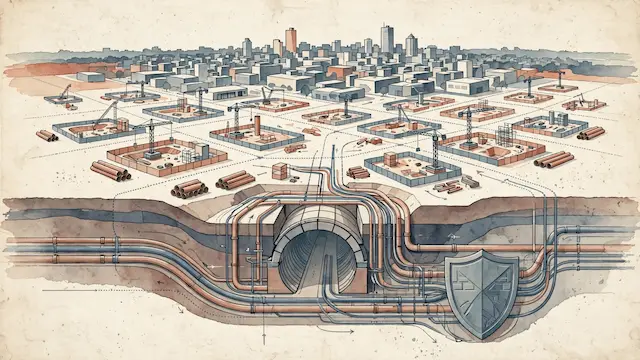
Despite the Tel Aviv metropolitan area's (Gush Dan) metro system not being scheduled to open until 2037, and major tunneling work not expected to begin until around 2030, extensive construction is already in full swing. Yifat Ofeq-Arzi, chairwoman of the Metropolitan Mass Transit System (NTA), stated that over a billion shekels are currently being invested in the project, emphasizing that it is a tangible reality, not just a plan.
Currently, 30 construction sites are active across Gush Dan, a number expected to increase to 70 next year. Work has commenced on all three planned metro lines: M1 has ten sites, M2 has eight, and M3 has twelve. These activities include work at maintenance depots in Rishonim, Segula, and Masu'ot, as well as in Tel Aviv, Holon, Bnei Brak, Givatayim, Givat Shmuel, Kiryat Ono, and Petah Tikva.
NTA is prioritizing "availability advancement", early infrastructure relocation, before the main tunneling phase. Kobi Ben Atar, manager of Line M1, explained this approach, learned from the light rail project, aims to prevent delays caused by large contractors getting stuck on initial utility transfers. This early work involves tasks like moving power lines or drainage systems, with costs potentially reaching hundreds of millions of shekels for significant relocations.
Specific projects include three years of excavation and site preparation at the Rishonim depot, costing an estimated 250-300 million shekels, and constructing an elevated facility at the Segula depot to mitigate flood risks. Smaller-scale work, such as preparing shafts for tunnel boring machines (TBMs) and relocating a major drainage line in Hayarkon Park, is also ongoing.
Ben Atar noted that while NTA aims to keep infrastructure relocations within metro project boundaries, external movements are sometimes necessary due to safety regulations or local authority plans. These may result in visible construction signs in adjacent areas without immediate underground tunneling. The project anticipates that areas where work has begun will remain occupied for the next decade, with NTA aiming for continuity in construction phases. Traffic arrangements are being managed, with potential for full street closures once major contractors arrive.
NTA is also leveraging the construction to upgrade municipal infrastructure, installing new systems like fiber optics and ensuring existing pipes meet current standards. While some municipalities present challenges, NTA works collaboratively with established partners like Tel Aviv and Rishon Lezion. The project is progressing towards the main tunneling phase by 2030, with early selection for the automated, driverless train systems already underway.
Mentioned
The same event, reported separately by each outlet. Open a few to compare what different newsrooms emphasize — and what they leave out.
Other 2

Not the same event — other stories that share this one’s people, places, or theme: background, reactions, and follow-ups.


