
Israel's Election Law: How Security Crises Could Affect Voting
Translated & summarized from Vesty by baba
Israel's Central Elections Committee is preparing for security threats that could disrupt the October 27 Knesset elections, including rocket attacks and terrorism. Elections can only be postponed by a Knesset vote of 80 members in an emergency preventing fair voting, a measure historically taken only once in 1973. The CEC is also planning alternative voting methods like extended hours and mobile stations, and has protocols for air raid sirens on election day, prioritizing safety while aiming to facilitate voting.
The story in 6 lines · by baba
- Israel's Central Elections Committee is preparing for security threats that could disrupt the October 27 Knesset elections.
- Elections can only be postponed by an 80-member Knesset vote in an emergency preventing fair voting.
- Historically, Israeli elections have been postponed only once, in 1973, due to the Yom Kippur War.
- The CEC is exploring alternative voting methods like extended hours and mobile stations.
- Protocols are in place for air raid sirens on election day, prioritizing safety and voting access.
- Security officials can issue directives that may temporarily halt voting.
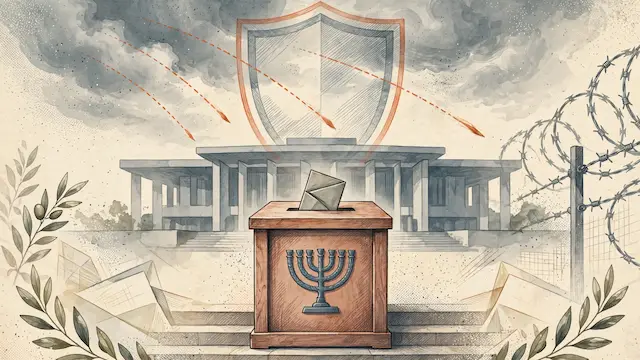
Israel's Central Elections Committee (CEC) is preparing for various security scenarios that could impact the upcoming Knesset elections, scheduled for October 27. These preparations include potential rocket attacks from Gaza, Lebanon, or Iran, as well as terrorist incidents within the country. A joint operational headquarters, comprising representatives from the CEC, police, Shin Bet, and the Home Front Command, is actively assessing and planning for all possibilities.
According to CEC Chairman Noam Solberg and Director General Dean Livne, elections can only be postponed if an emergency situation prevents free, equal, and accessible voting for all citizens. However, they emphasize that postponement should be a last resort, time-limited, and publicly justified. Israeli law, specifically Basic Law: The Knesset, stipulates that only a decision by at least 80 Knesset members in a plenary session, with support from both coalition and opposition, can postpone elections for a limited period, requiring a new date to be set simultaneously. Historically, Israeli elections have only been postponed once, in 1973, due to the Yom Kippur War, when they were moved from October 30 to December 31.
Beyond postponement, the CEC is exploring alternative measures to ensure voting proceeds even during security events. These include extending polling hours, facilitating early voting, establishing special and mobile polling stations, and implementing special procedures for soldiers and evacuated citizens. The CEC presidium also has the authority to delay the opening of a specific polling station, suspend voting, and extend its hours by up to 24 hours past the official closing time if exceptional circumstances arise in its vicinity. This provision, first introduced in 1969 after a Katyusha rocket attack disrupted elections in Kiryat Shmona, has been in effect since 1988.
In the event of an air raid siren on election day, polling station workers are instructed to secure ballot boxes and all voting materials, and then escort voters to protected areas. Voting can resume once the immediate danger has passed. Security officials also have the authority to issue directives, such as mandatory sheltering, which could temporarily halt voting. While the CEC Chairman can establish special instructions for polling stations in consultation with the IDF Chief of Staff to ensure the right to vote, these do not override emergency directives related to air raid sirens or immediate life-saving measures.
Mentioned




