
Israel Prepares for Elections Amidst Potential Security Threats
Translated & summarized from Ynet by baba
Israel's Central Elections Committee is planning to hold the upcoming Knesset elections on October 27th, despite potential security threats including missile attacks and a possible Iranian assault. The committee is working with security agencies to address various scenarios, prioritizing holding the elections on schedule with adjusted procedures. Postponement is only considered a last resort under specific legal conditions, requiring broad Knesset support, with historical precedent set during the 1973 Yom Kippur War.
The story in 6 lines · by baba
- Israel's elections are scheduled for October 27th amidst preparations for potential security threats.
- The Central Elections Committee aims to hold elections on time, even during emergencies.
- Postponement of elections requires a vote of 80 Knesset members and is a last resort.
- The committee is exploring solutions like extended voting hours and special polling stations.
- Procedures are in place for voting during alarms, including temporary suspension of ballots.
- Elections were previously postponed once in 1973 during the Yom Kippur War.
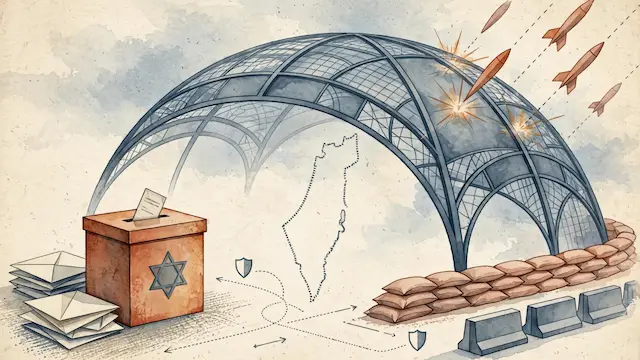
Israel's Central Elections Committee is actively preparing for various security scenarios that could impact the upcoming 26th Knesset elections, scheduled for October 27th. These preparations include responses to missile attacks, potential attacks from Iran close to election day, and other security threats. A joint situation room involving the Elections Committee, police, Shin Bet, and the Home Front Command is currently discussing all possible scenarios.
The guiding principle for the committee is to hold the elections on their scheduled date, even under emergency conditions. The committee draws a parallel to past instances where essential services continued to operate during severe security events, suggesting that elections can also proceed with necessary adjustments. The committee is exploring solutions such as extending voting hours, enabling early voting, establishing special mobile polling stations, and making arrangements for soldiers, evacuees, and those in isolation.
According to the committee's chairman, Deputy Supreme Court President Noam Solberg, and its Director General Dean Libna, the only valid reason to postpone elections would be an emergency situation preventing free, equitable, and accessible voting for all citizens. Any postponement must be a last resort, time-limited, and based on public facts. The law outlines two specific scenarios: a war or attack before election day, or alarms during the voting process itself.
Under Israeli law, postponing elections requires a vote of 80 Knesset members and can only be for a limited period. Historically, the Knesset elections were once postponed in 1973 during the Yom Kippur War, moving from October 30th to December 31st. Solberg has stated that a limited, supervised, and justified postponement might be acceptable, provided it does not serve to extend the current government's term.
Procedures are also in place for voting during alarms. Many polling stations are being located within protected areas, or near them. In the event of an alarm, ballot papers will be secured, and voters will evacuate to safe zones. The voting process can be temporarily suspended and resumed once the all-clear is given. Special directives allow senior officials to issue life-saving orders, which could necessitate the suspension of voting. The Elections Committee chairman, in consultation with the IDF Chief of Staff, can issue specific directives for polling stations to ensure voting rights are maintained, excluding immediate life-saving measures and alarm activations.
Mentioned
The same event, reported separately by each outlet. Open a few to compare what different newsrooms emphasize — and what they leave out.
Only Ynet so far.

Not the same event — other stories that share this one’s people, places, or theme: background, reactions, and follow-ups.




