
Israel Prepares for Elections Amidst Security Threats and Foreign Interference
Translated & summarized from Kikar HaShabbat by baba
Israel's Central Elections Committee is implementing unprecedented emergency measures for the upcoming elections due to security threats and potential foreign interference. A joint situation room involving the police, Shin Bet, and Home Front Command is preparing for scenarios including missile attacks, while an "influence hub" combats fake news and foreign campaigns with tech companies. The committee aims to hold elections as scheduled, with contingency plans for voter safety and temporary halts in voting during emergencies, though a postponement is a last resort.
The story in 6 lines · by baba
- Israel is enacting unprecedented emergency measures for upcoming elections due to security threats and foreign interference.
- An "influence hub" is combating fake news and foreign campaigns in cooperation with major tech companies.
- Police are instructed to remain strictly apolitical during election preparations and voting.
- Contingency plans are in place for missile attacks, including temporary halts in voting.
- Postponing elections is a last resort, requiring broad political consensus and only if a fair process is impossible.
- Polling stations are being located near protected areas, with protocols for voter safety during alarms.
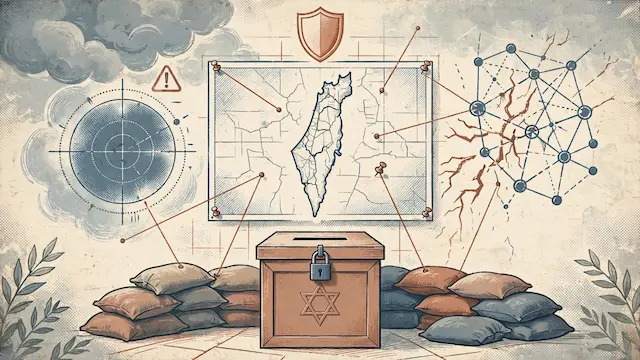
With less than two weeks until election day, Israel's Central Elections Committee is implementing unprecedented emergency preparations to counter potential threats to the democratic process. Amidst heightened security tensions and ongoing threats from Iran, the country is bracing for a complex election system, facing challenges ranging from foreign interference via social media to the possibility of missile attacks on election day.
Inspector General of the Israel Police, Dani Levi, held a meeting with senior police command staff, the acting director general of the Elections Committee, and representatives from the IDF and Shin Bet. Levi issued a clear directive to all officers, emphasizing the police's professional and apolitical stance, and stating that any officer expressing political views during service would face dismissal.
A dedicated "influence hub" has been established to combat fake news and foreign interference. Acting Director General Dean Livneh revealed that foreign campaigns aim to undermine public trust in the election's integrity. This hub collaborates with tech giants like Meta, Google, and Microsoft to immediately remove any discovered campaigns designed to disrupt the process. The Shin Bet is also involved, using advanced technology to monitor and thwart hostile campaigns in real-time. Livneh noted the current political climate is highly polarized, with a record number of petitions filed with the committee chairman. However, he assured that there are no concrete indications of a security threat on election day, and thousands of police and security personnel will be deployed.
A joint situation room, comprising representatives from the Elections Committee, police, Shin Bet, and the Home Front Command, is operating under the assumption that elections will proceed as scheduled, even in the event of an escalation or attack. The committee recalls past instances where essential services continued during severe security situations, suggesting voting can proceed with adjustments. Postponing general elections is considered an extreme scenario requiring broad political consensus, with a supermajority of 80 Knesset members needed to approve such a move. The only historical precedent for postponed elections was in 1973 due to the Yom Kippur War.
Elections Committee Chairman Noam Sohlberg and Livneh stated that a postponement would only be a last resort if a free, fair, and accessible process cannot be guaranteed. Alternative measures include increased use of mobile polling stations, early voting, and extended voting hours. To ensure voter safety, many polling stations have been located within or near protected areas. In the event of an alarm or hostile action, poll workers are instructed to secure the ballot box, collect ballots, and direct attendees to shelter. Voting would temporarily halt and resume only after the threat is neutralized and authorization is given. The law also grants the Elections Committee presidency emergency powers to postpone or extend voting hours in specific areas, a provision established after Katyusha rocket fire in 1969, ensuring citizens in conflict zones can vote securely.
Mentioned




