
Iran's Terror Proxies Repay Support Amid Economic Crisis
Translated & summarized from N12 by baba
Iran's terror proxies, including Hezbollah and Hamas, are now sending money back to Iran's Revolutionary Guard due to severe U.S.-imposed economic pressure. U.S. Central Command Commander Admiral Brad Cooper revealed Iran has lost $25 billion in oil revenue and $350 million in crypto assets. This financial strain is reportedly leading to delayed payments for fighters and increased Iranian aggression, while mediators await Iran's response to a U.S. war-ending proposal.
The story in 6 lines · by baba
- Iran's terror proxies are sending funds back to the Revolutionary Guard due to economic pressure, according to U.S. Central Command.
- Iran has lost an estimated $25 billion in oil revenue due to the U.S. blockade, Admiral Brad Cooper stated.
- The U.S. has also frozen $350 million in Iranian cryptocurrency assets.
- Iranian-backed militias are reportedly delaying fighter salaries to send money to the Revolutionary Guard.
- U.S. officials link increased Iranian aggression to financial desperation and the U.S. pause on strikes in the Strait of Hormuz.
- Mediators await Iran's response to a U.S. proposal to end the war, urging a prompt reply.
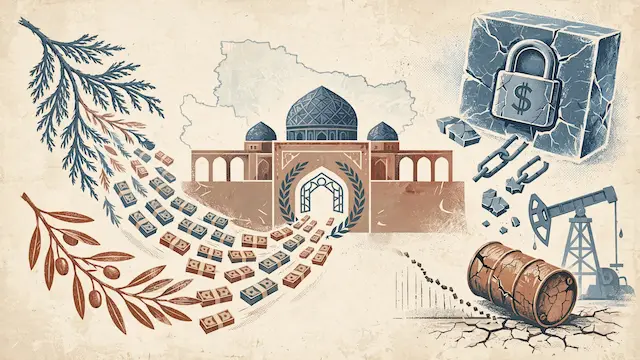
Iran's network of supported terror groups, including Hezbollah, Hamas, and Iraqi militias, are now sending funds back to Iran's Revolutionary Guard Corps due to severe economic pressure on the regime, according to U.S. Central Command (CENTCOM) Commander Admiral Brad Cooper. This comes as the Trump administration continues its "maximum pressure" campaign against Tehran, employing naval blockades and extensive sanctions.
Cooper stated that Iran has lost an estimated $25 billion in oil revenue due to the U.S. blockade. Additionally, CENTCOM and the U.S. Treasury have frozen $350 million in Iranian cryptocurrency assets. The economic strain is reportedly so severe that some Iranian-backed militias are delaying payments to their own fighters to redirect funds to the Revolutionary Guard, which is also struggling to pay its soldiers.
U.S. officials believe this financial desperation contributes to increased Iranian aggression, particularly attacks on shipping in the Strait of Hormuz. However, the U.S. military has recently reduced strikes against missile launchers in the area, a move reportedly ordered by the White House to avoid escalation before the U.S. midterm elections. This pause has emboldened Iran, with officials concerned it could deter shipping companies, reduce oil exports, and spike global oil prices.
Meanwhile, the White House and Qatari mediators are awaiting Iran's response to a U.S. proposal aimed at ending the ongoing war, with internal discussions reportedly continuing in Tehran. Regional mediators have urged Iran not to delay its response until after the U.S. elections, warning that President Trump could become more aggressive towards Iran regardless of the outcome.
Mentioned
The same event, reported separately by each outlet. Open a few to compare what different newsrooms emphasize — and what they leave out.
Only N12 so far.
