
Iran's Terror Proxies Repay Support Amid Economic Crisis
Translated & summarized from Mako by baba
Iranian-backed groups like Hezbollah and Hamas are sending money back to Iran's Revolutionary Guard due to U.S. sanctions, which have cost Iran $25 billion in oil revenue. The U.S. has also frozen $350 million in Iranian crypto assets. Despite increased attacks on shipping in the Strait of Hormuz, the waterway remains open. Iran's response to a U.S. proposal to end the war is still pending.
The story in 5 lines · by baba
- Iranian-backed groups like Hezbollah and Hamas are sending funds back to Iran's Revolutionary Guard due to economic pressure.
- U.S. sanctions have cost Iran an estimated $25 billion in oil revenue, according to CENTCOM Commander Brad Cooper.
- The U.S. has frozen $350 million in Iranian cryptocurrency assets.
- Despite increased attacks, the Strait of Hormuz remains open to shipping.
- Iran has not yet responded to a U.S. proposal aimed at ending the war.
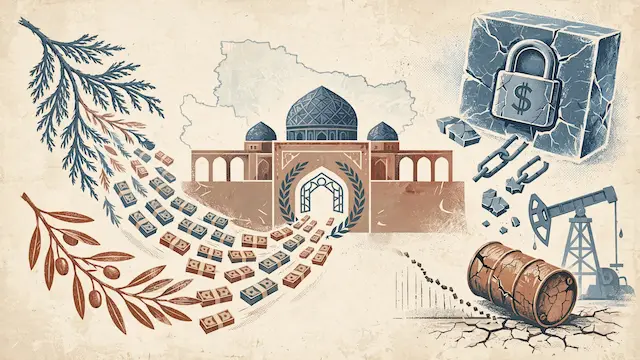
Iranian-backed terrorist organizations, including Hezbollah, Hamas, and Iraqi militias, are now sending funds back to Iran's Islamic Revolutionary Guard Corps (IRGC) due to severe economic pressure on the regime, according to U.S. Central Command (CENTCOM) Commander Admiral Brad Cooper. This financial strain has led some of these groups to delay payments to their own fighters in order to transfer money to the IRGC, which is also struggling to pay its soldiers.
The U.S. economic blockade, including naval blockades and extensive sanctions, has cost Iran an estimated $25 billion in oil revenue, Cooper stated in a video released Friday. Additionally, U.S. CENTCOM and the Treasury Department have frozen $350 million in Iranian cryptocurrency assets. U.S. officials believe this economic pressure is causing frustration and more aggressive behavior from the Iranian regime, though they had hoped it would lead to concessions on its nuclear program.
Despite increased Iranian attacks on shipping in the Strait of Hormuz, the waterway remains open, with 400 ships and 100 million barrels of oil passing through it in the past week. However, a temporary halt in U.S. strikes against missile launchers in the region, ordered to avoid escalation before U.S. midterm elections, has emboldened Iran. U.S. officials worry these attacks could deter shipping companies, reduce oil exports, and cause oil prices to surge.
Meanwhile, the White House and Qatari mediators are awaiting Iran's response to a U.S. proposal aimed at ending the war, with internal discussions reportedly ongoing in Tehran. Regional mediators have urged Iran not to delay its answer until after the U.S. elections, warning that President Trump might adopt a more aggressive stance afterward.
Mentioned
The same event, reported separately by each outlet. Open a few to compare what different newsrooms emphasize — and what they leave out.
Only Mako so far.

Not the same event — other stories that share this one’s people, places, or theme: background, reactions, and follow-ups.
