
Israel Tightens Pilot Citizenship Rules, Sparking International Aviation Disputes
Translated & summarized from Cursorinfo by baba
Israel has imposed new restrictions on foreign pilots from about 30 countries, including those with dual citizenship, banning them from its airspace for direct and transit flights. The move, prompted by a FlyDubai incident, has drawn criticism from the Air France union for being discriminatory. These new rules could disrupt international flight routes that utilize Israeli airspace, forcing airlines to adjust plans and potentially increase travel times.
The story in 5 lines · by baba
- Israel banned pilots from about 30 countries, including dual citizens, from its airspace.
- The new restrictions affect both direct flights and transit routes through Israeli airspace.
- The decision was made after a security incident on a FlyDubai flight.
- The Air France union protested the rules as discriminatory and potentially illegal.
- The restrictions could force airlines to reroute flights, impacting travel time and fuel consumption.
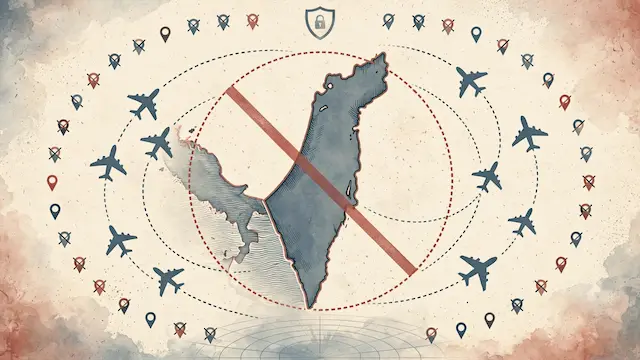
Israel has implemented new regulations restricting foreign pilots with citizenship from approximately 30 countries from entering its airspace, affecting both direct flights and transit routes. These measures, which extend to pilots with dual citizenship if one passport is from a listed nation, were enacted following an incident on a FlyDubai flight that raised security concerns.
The specifics of the restrictions were revealed by the Air France union, which has protested the decision, deeming it discriminatory. The union criticized the airline's management for agreeing to comply with Israeli demands, suggesting it might violate French law.
The list of restricted nationalities primarily includes countries in the Middle East, Asia, and Africa, such as Iran, Pakistan, Saudi Arabia, Algeria, Tunisia, Oman, Niger, Indonesia, and Malaysia. Notably, citizens of Lebanon and Syria, with whom Israel has long-standing hostile relations, are also included, as are citizens of Turkey, reflecting recent diplomatic tensions. Several Latin American countries, including Bolivia, Venezuela, and Cuba, are also on the list.
These new rules could significantly impact international flight routes. A 2020 agreement between Israel and Jordan had previously expanded transit options between Europe, the Gulf States, and Asia, facilitated by Saudi Arabia's decision to allow Israeli flights. However, recent regional tensions and these new pilot citizenship restrictions may force airlines to reroute flights, increasing travel time and fuel consumption, and complicating flight planning.
Air France has confirmed its adherence to the new regulations, while Russian airline Red Wings also indicated compliance without providing specific details. The incident on the FlyDubai flight appears to have prompted Israel to re-evaluate its aviation security protocols, leading to the broader restrictions on foreign flight crews.
Mentioned


