
Israel's Health Funds Show Reduced Deficit But Financial Gaps Remain
Translated & summarized from NEWSru Israel by baba
Israel's Ministry of Health reported a 44% decrease in the combined deficit of its four major health maintenance organizations (HMOs) for 2025, reaching approximately 194 million shekels. Despite this, the largest HMO, Clalit, still posted a 364 million shekel deficit, largely due to the costs of its hospital network. Maccabi, conversely, reported the largest surplus at 111 million shekels. The report also noted a 25% increase in Israelis switching HMOs, with Maccabi gaining the most members and Clalit losing the most.
The story in 6 lines · by baba
- Israel's four health maintenance organizations reduced their combined deficit by 44% to 194 million shekels in 2025.
- Clalit, the largest HMO, reported a deficit of 364 million shekels, primarily due to its hospital network costs.
- Maccabi achieved the largest surplus of 111 million shekels, though it was lower than the previous year.
- Over 228,000 Israelis switched health maintenance organizations in 2025, a 25% increase from 2024.
- Maccabi gained the most members from HMO switches, while Clalit experienced the largest net loss.
- The cost of Israel's state-funded medical services basket rose by 6.21% to 80.59 billion shekels in 2025.
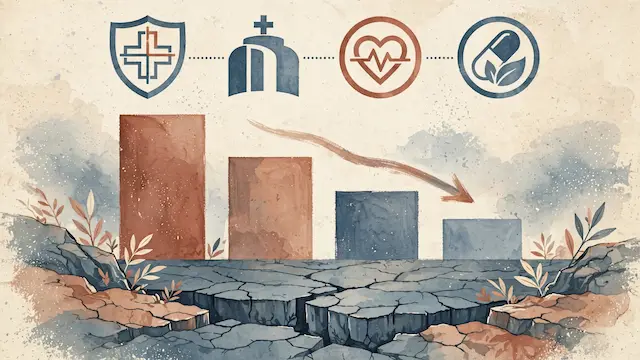
Israel's Ministry of Health has released its 2025 financial report for the country's four health maintenance organizations (HMOs), revealing a 44% reduction in their combined deficit to approximately 194 million shekels, down from 346 million in 2024. Despite this improvement, significant financial disparities persist among the organizations. The largest HMO, Clalit, which serves over half of Israel's population, ended the year with a deficit of 364 million shekels, though this represents an improvement from its 542 million shekel deficit in 2024. In contrast, Maccabi led with a surplus of 111 million shekels, followed by Meuhedet with 53 million shekels and Leumit with 6 million shekels. Maccabi's surplus, however, was lower than its 2024 surplus of 189 million shekels, attributed to increased expenses in salaries, medical services, and equipment. Meuhedet's improved results were boosted by income from its medical group, Medica.
The primary reason for Clalit's continued losses is the substantial cost of maintaining its own network of 14 hospitals, which incurred a deficit of about 2.83 billion shekels in 2025, even with government support. This deficit was reduced from 3.22 billion shekels in 2024, partly due to lower professional liability insurance costs and increased government subsidies. Clalit highlighted that its financial figures are not directly comparable to other HMOs due to the burden of its hospital network and insufficient state compensation. The damage to the Soroka Medical Center in Be'er Sheva from an Iranian missile strike in June 2025 also contributed to increased costs and reduced services.
In parallel, data from the National Insurance Institute shows a significant increase in Israelis switching HMOs in 2025, with 228,513 individuals changing providers, a 25% rise from the previous year. Maccabi gained the most members through these transitions, with a net increase of 11,182, while Clalit lost 10,533 members. Meuhedet saw a net gain of 687 members, and Leumit lost 1,336. These transitions represent about 2.3% of all insured Israelis.
Overall healthcare spending continued to rise, with total HMO revenues increasing by 6.5% in 2025. Government funding, a major source of revenue, grew by 6.4%. The cost of the state's medical services basket increased by 6.21% to 80.59 billion shekels, driven by new medications, technologies, population growth, and rising service costs.
Moshe Bar-Siman-Tov, Director General of the Ministry of Health, described the overall deficit reduction as a positive sign of financial stabilization but stressed the need for ongoing budget adjustments to account for demographic changes and increased morbidity. He emphasized that increased government investment in the medical basket and improved HMO efficiency are crucial for ensuring the sustainability and accessibility of public healthcare.
Mentioned
The same event, reported separately by each outlet. Open a few to compare what different newsrooms emphasize — and what they leave out.
Centre 2Right 1Other 1



Not the same event — other stories that share this one’s people, places, or theme: background, reactions, and follow-ups.




