
Israeli Health Funds Report Narrowed Deficit, But Remain Heavily Reliant on Government Aid
Translated & summarized from Israel Hayom by baba
Israel's four national health funds collectively reduced their deficit to 194 million shekels in 2025, down from 346 million the previous year, according to a Ministry of Health report. However, the organizations remain heavily reliant on government subsidies, which prevented a combined deficit of 4.9 billion shekels. Clalit, the largest fund, was the only one to report a deficit of 364 million shekels, while Maccabi, Meuhedet, and Leumit posted surpluses. Rising health basket costs and hospitalization expenses continue to challenge the system.
The story in 6 lines · by baba
- Israeli health funds' collective deficit fell 44% to 194 million shekels in 2025, but government aid prevented a 4.9 billion shekel deficit.
- Clalit, Israel's largest health fund, reported a 364 million shekel deficit in 2025, an improvement from the prior year.
- Maccabi, Meuhedet, and Leumit health funds reported budget surpluses in 2025, largely due to government subsidies.
- The cost of Israel's health basket exceeded 80 billion shekels in 2025, a 6.2% increase from the previous year.
- Hospitalization expenses rose 3.5% in real terms, now accounting for 43% of the health funds' total expenditures.
- Ministry of Health officials cited financial stabilization but warned of ongoing demographic and health challenges.
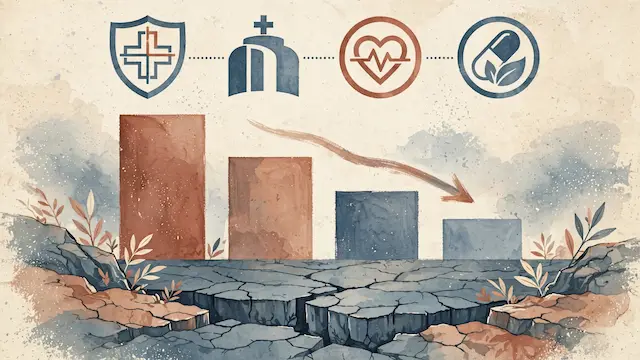
Israel's four national health maintenance organizations (HMOs) collectively reduced their deficit by 44% in 2025, reaching approximately 194 million shekels, a significant improvement from the 346 million shekel deficit in the previous year. However, a Ministry of Health report reveals a growing dependence on government subsidies, rising hospitalization costs, and a persistent gap between available funds and the system's needs. Without government support, the HMOs would have faced a staggering 4.9 billion shekel deficit in 2025, up from 4.4 billion in 2024.
The largest HMO, Clalit, was the only organization to report a deficit, amounting to about 364 million shekels, though this was an improvement from its 542 million shekel deficit in 2024. Despite this, Clalit noted a reduction in the deficit of its hospitals by 400 million shekels, bringing it to 2.8 billion shekels. Without government aid, Clalit's deficit would have surged to over 3.1 billion shekels.
In contrast, Maccabi, Meuhedet, and Leumit all reported budget surpluses, largely due to government funding. Maccabi had a surplus of 111 million shekels, Meuhedet reported 53 million shekels (a substantial increase from 7 million the previous year), and Leumit had a surplus of 6 million shekels. The report cautions that without government assistance, these organizations would also have faced significant deficits, totaling hundreds of millions of shekels.
The overall cost of the health basket continued to rise, exceeding 80 billion shekels in 2025, a 6.2% increase attributed to expanded medical technologies, demographic growth, and index updates. Hospitalization expenses also climbed by a real rate of 3.5%, now constituting 43% of the HMOs' total expenditures. Community healthcare costs grew by approximately 3%, with notable increases in development, clinics, and private practices.
Ministry of Health Director General Moshe Bar Siman Tov described the data as indicative of financial stabilization, attributing it to increased government investment and HMO efficiency. He stressed the need to adapt the budget to demographic challenges. Chaim Hofart, Head of the Economics Division, emphasized that stability allows for future planning and aims to increase the demographic coefficient to prevent future deficits. Clalit stated its deficit reduction reflects responsible management during a war year, highlighting its unique structural challenge as operator of 14 public hospitals without adequate reimbursement and the costs associated with damage to the Soroka Medical Center.
Mentioned
The same event, reported separately by each outlet. Open a few to compare what different newsrooms emphasize — and what they leave out.
Centre 2Right 1Other 1



Not the same event — other stories that share this one’s people, places, or theme: background, reactions, and follow-ups.




