Iran Re-arming Rapidly, Posing Missile Threat to Israel
Translated & summarized from Behadrei Haredim by baba
Israeli intelligence estimates that Iran possesses between 1,800 and 2,000 ballistic missiles capable of reaching Israel, and has restored a significant portion of its damaged launch systems. Iran is also attempting to re-establish threats along Israel's borders, particularly in southern Syria, by operating through local cells and clandestine infrastructure. Israeli defense officials are considering the possibility of further military action before upcoming elections in Israel and the United States, though the ultimate decision may rest with Washington.
The story in 5 lines · by baba
- Iran is estimated to possess 1,800 to 2,000 ballistic missiles capable of reaching Israel.
- Iran has restored a significant portion of its launch systems damaged in recent conflicts.
- Tehran is attempting to re-establish threats along Israel's borders, particularly in southern Syria.
- Iran is focusing on local cells and clandestine infrastructure to operate covertly.
- Israeli defense officials have not ruled out further military action before upcoming elections.
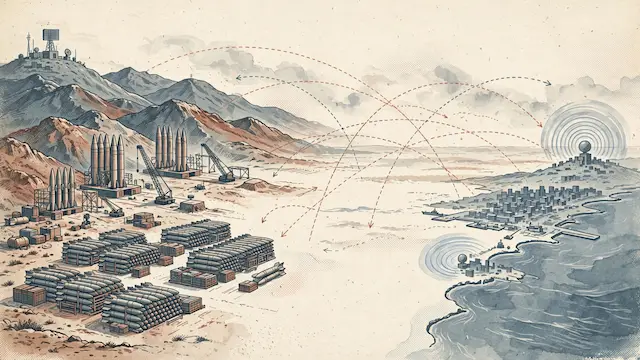
Iran is re-arming at an accelerated pace, with current Israeli intelligence estimates indicating the Tehran regime possesses approximately 1,800 to 2,000 ballistic missiles capable of reaching Israel. Concurrently, Iran has managed to restore a significant portion of its launch systems that were damaged during recent conflicts. Before the recent hostilities, Iran's ballistic missile stockpile was estimated at around 2,500. Despite substantial damage to production facilities and launch capabilities, Israeli defense officials observe a concerted Iranian effort in recent months to rebuild these capacities. "We never said there was 100% destruction of Iran's production capability," an Israeli intelligence source stated. "From the moment the campaign ended, the Iranians worked vigorously to repair the heavy damage they sustained. The message to the political echelon was unequivocal: the more time passes since the last day of the campaign, the greater the scope of repair and production will be."
However, the numbers do not tell the whole story. Israel is currently assessing how many of Iran's remaining missiles are ready for immediate launch and how quickly the restored launchers can become operational. Current estimates suggest Iran's production capacity is still far from its pre-conflict levels. Beyond missiles, Iran is also attempting to re-establish threats along Israel's borders, particularly in southern Syria. Recent intelligence revealed attempts to reactivate infrastructure linked to Hezbollah and Iran in the Daraa region, including a cell attributed to Hezbollah. The Israeli military recently struck a Syrian operative near the Syria-Lebanon border, whom the IDF stated was acting under Iranian direction to advance plans for explosive drones and rockets.
Israeli assessments suggest Tehran is trying to operate covertly this time. Unlike the Assad era, the current Syrian regime under Bashar al-Assad is reportedly resisting Iranian entrenchment. Consequently, instead of building large, overt military installations, the Revolutionary Guards are focusing on local cells and clandestine infrastructure that are harder to detect and thwart. Significant funds, weapons, and other capabilities have reportedly been transferred to these groups. The objective, according to Israeli assessments, is to rebuild a "ring of fire" that would allow Iran to exert pressure on Israel from multiple fronts simultaneously. Amidst Iran's rebuilding efforts, Israeli defense officials have not ruled out the possibility of further military action before upcoming elections in Israel and the United States. "The possibility of action, even before the elections in Israel and the US, cannot be ruled out," a senior security official commented. Conversely, other sources believe an attack is unlikely during this period. The decision for any further action against Iran, should Israel deem it necessary, is expected to be made in Washington rather than Jerusalem.
Mentioned