Iran Rebuilds Missile Factories Despite US-Israeli Strikes, Report Claims
Translated & summarized from Ynet by baba
Iran has reportedly succeeded in rebuilding its missile and drone factories despite U.S. and Israeli strikes, according to a Bloomberg report. Western officials suggest Tehran remains capable of producing weapons and replenishing its arsenal. This contradicts U.S. claims of having destroyed Iran's military capabilities. Meanwhile, the U.S. military has prepared plans for renewed strikes, though President Trump has shown hesitation, reportedly rejecting multiple proposals for significant military action.
The story in 6 lines · by baba
- Iran has reportedly rebuilt its missile and drone factories despite months of U.S. and Israeli bombing.
- Western officials state Tehran retains the capability to produce weapons and replenish its stockpiles.
- This assessment contradicts U.S. claims that airstrikes had eliminated Iran's ability to threaten U.S. bases and allies.
- The U.S. military has prepared plans for renewed strikes against Iran, but President Trump has hesitated.
- Iran has intensified attacks on vessels in the Strait of Hormuz, with at least 10 ships hit recently.
- Iran's Foreign Minister announced ongoing negotiations via intermediaries regarding a "seven-day plan."
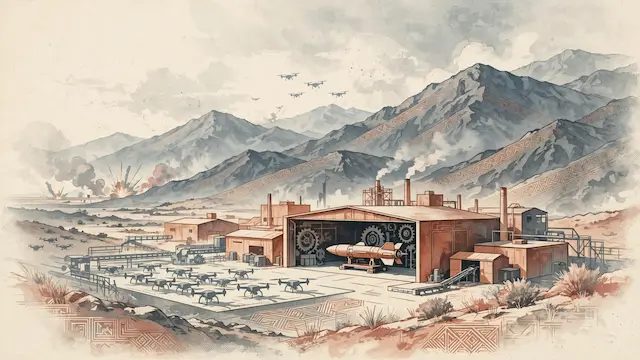
Iran has successfully rehabilitated its missile and drone factories despite months of bombing by the United States and Israel, according to a Bloomberg report citing sources familiar with the matter. Western officials, who requested anonymity, stated that Tehran retains the capability to produce weapons and replenish its stockpiles. One source described Iran as "well-equipped" with ballistic missiles and anti-ship weaponry, capable of rapid production of additional missiles. The report also suggests Russia is supplying missiles to Iran, aligning with earlier assessments from June. Iran's ability to rebuild its missile facilities allows it to replenish its arsenal while U.S. President Donald Trump has refrained from further strikes ahead of the midterm elections.
This assessment contradicts repeated claims by Trump and his administration that eight months of airstrikes had eliminated Iran's ability to threaten U.S. bases and allies. Trump had previously declared the Iranian military "completely destroyed," and then-Secretary of Defense Pete Hegseth stated in September that the U.S. had destroyed Iran's "military-industrial capability" and "all its security infrastructure." The current report indicates Iran's capacity could allow it to restore its missile systems if Trump follows through on his promise not to attack Iran before the November midterms.
Additionally, Tehran has intensified attacks on vessels in the Strait of Hormuz, with the British Navy reporting at least 10 ships hit in the past week. A White House spokesperson rejected the Bloomberg report's findings, stating President Trump "completely destroyed Iran's nuclear facilities" and subsequently its conventional defense, including ballistic missiles and naval assets.
The U.S. military has been preparing for renewed strikes against Iran, with Pentagon officials developing plans for an intensive three-day operation. However, President Trump has hesitated to resume significant combat operations, reportedly rejecting five proposals for major actions against Iran or the Houthis in Yemen in recent months. Despite military preparations and escalating Iranian attacks on oil tankers, Trump ordered strike options to be prepared, with senior administration officials discussing plans at Camp David, led by Vice President J.D. Vance. The focus was on a short, powerful operation targeting Iran's missile and drone systems, many of which the Revolutionary Guards have reportedly rebuilt.
Meanwhile, Iran's Foreign Minister Abbas Araghchi announced that negotiations are ongoing via intermediaries, and Iran is reviewing the U.S. position on its "seven-day plan." The plan, reportedly presented in September, included a week-long cessation of hostilities, release of $12 billion in frozen assets, lifting sanctions on oil exports, removing the U.S. blockade on Iranian ports, and guarantees of Iranian sovereignty. Iran's government spokesperson Fatemeh Mohajerani stated Iran is "ready for negotiation and not afraid of it," and will defend the country through "war or negotiation."
Mentioned
The same event, reported separately by each outlet. Open a few to compare what different newsrooms emphasize — and what they leave out.
Centre 3



Not the same event — other stories that share this one’s people, places, or theme: background, reactions, and follow-ups.