US Prepares Attack Plans Against Iran, Deploys Naval Force
Translated & summarized from Behadrei Haredim by baba
The Pentagon has prepared attack plans against Iran for President Donald Trump, targeting missile and drone sites, command bases, and energy facilities. Trump has indicated he will not approve strikes before the US midterm elections on November 3, despite ongoing diplomatic efforts and significant US naval deployments in the Middle East. The US military is positioning three aircraft carriers and thousands of personnel in the region, an unprecedented show of force. Concerns are rising over Iran's enhanced tactics, including attacks on oil tankers and the use of satellite imagery for precise strikes.
The story in 6 lines · by baba
- The Pentagon has prepared operational plans for a three-day strike against Iran targeting its missile and drone arsenal.
- President Donald Trump will not approve an attack before the US midterm elections on November 3.
- The US military is deploying an unprecedented three aircraft carriers to the Middle East by late October.
- US officials report Trump has vetoed five previous proposals for military action against Iran or Yemen's Houthis.
- Diplomatic efforts continue, but disagreements persist over the sequencing of nuclear program talks.
- The US Treasury Department imposed sanctions on 17 vessels in Iran's shadow fleet.
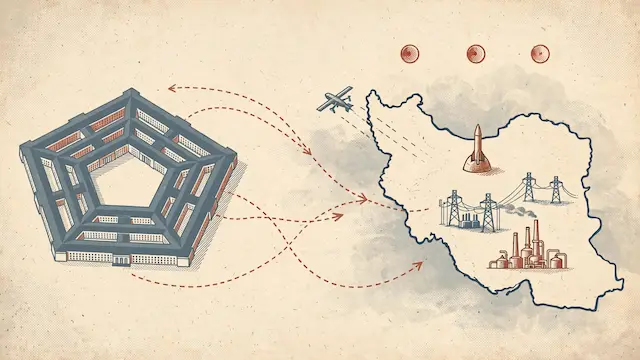
The Pentagon has developed operational plans for renewed strikes against Iran at the request of President Donald Trump, focusing on an intensive three-day operation, according to The New York Times. These plans, discussed at a meeting led by Vice President J.D. Vance at Camp David, aim to target the Revolutionary Guards' missile and drone arsenal, command bases, and energy facilities. However, Trump has stated he will not approve an attack before the US midterm elections on November 3, noting that "productive talks" are ongoing. U.S. officials report that the Pentagon and National Security Council have presented five different proposals for military operations against Iran or the Houthi rebels in Yemen in recent months, all of which Trump vetoed. Administration assessments suggest the President will wait until after the Israeli elections on October 27 and the US midterm elections the following week before making a decision. Concurrently, diplomacy with Tehran continues through intermediaries but faces difficulties regarding the nuclear program, with Washington demanding nuclear agreements first and Iran insisting on addressing it last. Amidst White House hesitation, the US military is concentrating immense firepower in the region. By the end of October, three aircraft carriers, the USS Theodore Roosevelt, USS George H.W. Bush, and USS George Washington, will be in the Middle East, alongside dozens of other vessels, hundreds of aircraft, and over 20,000 sailors and Marines. This represents an unprecedented deployment of three carriers in the region since 2003. The Pentagon expresses concern over the sophistication of Iranian tactics, which have included attacks on at least 13 to 20 oil tankers since September and the use of satellite imagery from Chinese companies for precise strikes on American bases. The improvement in Iranian capabilities necessitates a larger number of interceptors, straining US stockpiles and forcing CENTCOM to move munitions from Europe and Asia. Additionally, the US Treasury Department imposed sanctions on 17 vessels in Iran's shadow fleet on Thursday.
Mentioned
The same event, reported separately by each outlet. Open a few to compare what different newsrooms emphasize — and what they leave out.
Centre 2Haredi 1



Not the same event — other stories that share this one’s people, places, or theme: background, reactions, and follow-ups.