Pentagon Develops Extensive Iran Attack Plan Despite Trump's Statements
Translated & summarized from N12 by baba
The Pentagon has developed a plan for a three-day intensive strike on Iran's missile and drone depots, energy facilities, and military sites, despite President Trump's public statements against attacking before the midterm elections. Senior U.S. officials, including Vice President J.D. Vance, discussed these plans at Camp David. The U.S. is also concentrating an unprecedented number of aircraft carriers and personnel in the Middle East. Diplomatic efforts continue, but are stalled on Iran's nuclear program, with Trump expected to wait until after upcoming elections in Israel and the U.S. before making a decision.
The story in 6 lines · by baba
- The Pentagon has drafted a plan for a three-day intensive strike on Iran's missile and drone depots.
- Senior U.S. officials, led by Vice President J.D. Vance, discussed the strike plans at Camp David.
- President Trump has publicly stated he will not attack Iran before the U.S. midterm elections.
- The U.S. is concentrating three aircraft carriers in the Middle East for the first time since 2003.
- Diplomatic talks regarding Iran's nuclear program remain stalled.
- President Trump is expected to wait until after upcoming Israeli and U.S. elections to decide on military action.
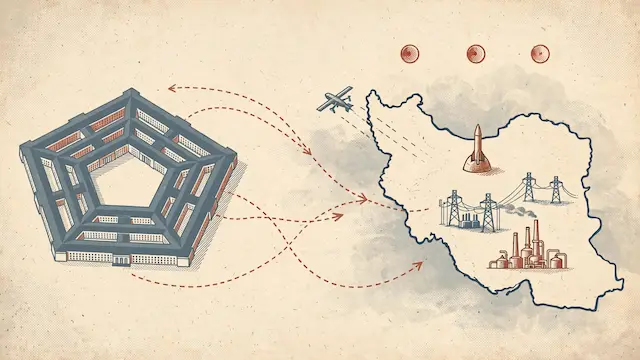
The Pentagon has developed a plan for a broad military strike against Iran, according to a report citing U.S. officials. Senior American officials, led by Vice President J.D. Vance, discussed the potential for a short, intense three-day campaign focused on Iran's missile and drone depots, energy facilities, and military sites. This planning occurs despite President Donald Trump's public statements indicating he would not attack Iran before the midterm elections and that the two countries were engaged in "productive talks."
Despite Trump's declarations, the U.S. military is concentrating forces in the Middle East at an unprecedented level. The New York Times reported that the Pentagon has prepared options for renewing military operations against Iran, though Trump has repeatedly decided against resuming hostilities. The discussions about these operational plans took place at Camp David on a recent Friday.
Recent intelligence suggests Iran has become a tougher adversary due to improved military tactics, making missile interceptions more challenging for U.S. ammunition reserves. Iran has also reportedly become more effective at striking U.S. bases, aided by satellite imagery from Chinese firms. Since September, Iran has attacked at least 13 ships, with some intelligence estimates placing the number closer to 20, raising concerns about future energy shipments despite increased oil exports from the Middle East.
U.S. military commanders are preparing for larger military operations should the President change his mind. The USS Theodore Roosevelt carrier strike group recently departed San Diego to join the USS George W. Bush and USS George Washington in the Middle East, marking the first time three aircraft carriers have been concentrated in the region since 2003. By the end of October, over 20,000 sailors and Marines, along with hundreds of aircraft, will be in the area.
Despite the force buildup, senior officials are concerned about the depletion of global defensive weapon stockpiles and the U.S. capacity to intercept Iranian attacks. U.S. Central Command has drawn weaponry from Europe and Asia to bolster forces in the region. Meanwhile, some close advisors to Trump question whether military action would alter Tehran's decisions, arguing that economic pressure needs more time to compel concessions. The Treasury Department recently imposed sanctions on 17 vessels allegedly part of Iran's oil smuggling network.
Diplomatic efforts continue through intermediaries, but talks remain stalled over Iran's nuclear program, with the U.S. seeking an agreement on nuclear ambitions first, while Iran insists these discussions occur at the end of negotiations. Officials estimate Trump will wait until after the Israeli elections on October 27 and the U.S. midterm elections the following week before deciding on any potential military action.
Mentioned
The same event, reported separately by each outlet. Open a few to compare what different newsrooms emphasize — and what they leave out.
Only N12 so far.

Not the same event — other stories that share this one’s people, places, or theme: background, reactions, and follow-ups.