
Al-Aqsa Mosque Faces Crisis Amid Increased Jewish Rituals and Diminished Palestinian Response
Translated & summarized from Alarab by baba
The Al-Aqsa Mosque is facing a critical period with increased Jewish rituals and incursions, while Palestinian response has weakened compared to past events like Ariel Sharon's 2000 visit. Israeli National Security Minister Itamar Ben-Gvir has participated in these rituals, raising concerns about normalization. The article contrasts the current situation with the 1990 and 2000 events, attributing the diminished response to factors like the Gaza war, Palestinian division, and weakened institutions. It calls for renewed collective action and Arab-Islamic support to protect the mosque.
The story in 6 lines · by baba
- Al-Aqsa Mosque faces a critical period with escalating Jewish rituals and diminished Palestinian response.
- Past events like Ariel Sharon's 2000 visit sparked intifadas, unlike current incursions by Itamar Ben-Gvir.
- Increased Jewish religious practices at Al-Aqsa are becoming normalized and officially protected.
- Palestinian response capacity has weakened due to Gaza war, division, and institutional decline.
- The article calls for renewed Palestinian collective action and Arab-Islamic support for Al-Aqsa.
- A 1990 incident involving the Temple Mount Faithful group led to Israeli forces firing on protesters.
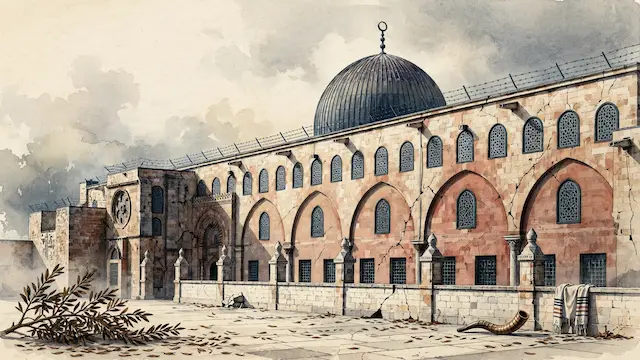
The Al-Aqsa Mosque is experiencing one of its most difficult periods due to escalating incursions and Jewish Talmudic rituals within its courtyards, coupled with a decline in popular and official response. Historically, Al-Aqsa has been a focal point of conflict and a catalyst for uprisings. The article recalls the 1990 incident where Israeli forces fired on Palestinians protesting the planned laying of a cornerstone for the "Third Temple" by the Temple Mount Faithful group, resulting in martyrs and wounded, including Adnan Khalaf Muwasi from the city of Tamra. Ten years later, in September 2000, Ariel Sharon's visit to the mosque ignited a bloody crackdown that led to an intifada across Palestine and garnered broad Arab and Islamic solidarity.
In contrast, the article notes that current repeated incursions by Itamar Ben-Gvir, accompanied by widespread prayer, prostration, and blowing the shofar within the mosque, have not elicited a commensurate response. The intifada of 2000, while sparked by Sharon's visit, was fueled by accumulated anger over the occupation, settlements, the Oslo Accords' failures, and the collapse of the political horizon after the Camp David summit. The mosque's desecration unified these grievances, mobilizing Palestinian political and popular forces, leading to widespread confrontations and significant Palestinian casualties.
Today, the nature of the transgression has evolved from provocative political visits to frequent religious practices officially protected, including group prayers, prostration, blowing the shofar, dancing, and bringing prayer books. In September 2026, the shofar was reportedly blown thirty times in a single day, with Ben-Gvir participating in Talmudic rituals and asserting sovereignty. The danger lies in these violations becoming normalized and accepted as rights. The article attributes the diminished capacity to confront these actions to the Gaza war, increased repression, Palestinian division, weakened institutions, and a focus on electoral politics.
Despite the challenges, the resilience of Jerusalemites, mosque guards, and a small group of Palestinian resistors from within Israel are acknowledged. However, the article stresses that they cannot be left alone. It calls for rebuilding collective capacity, re-centering Al-Aqsa in national and popular action, supporting those defending it, and strengthening continuous presence. Palestinians within Israel are urged to play a special role in its upkeep and support. Arab and Islamic nations are called upon to move beyond condemnation to provide steadfast support for Jerusalemites and exert political, diplomatic, and economic pressure to halt the aggressions and protect the rights of worshippers and the Waqf's authority. The legacy of past sacrifices demands renewed efforts to protect Al-Aqsa, ensuring it remains central to consciousness and action for future generations.
Mentioned
