
Gaza Hospitals Struggle One Year After Ceasefire
Translated & summarized from Al-Shams by baba
Gaza's hospitals are still struggling with severe shortages of medical supplies and functioning capacity one year after a ceasefire, according to Melina Ansari of Physicians for Human Rights. None of the 36 hospitals are fully operational due to ongoing electricity crises and infrastructure problems. A critical medical evacuation route for patients needing specialized treatment remains largely closed, with thousands awaiting care. Humanitarian organizations also face significant restrictions in their operations.
The story in 6 lines · by baba
- Gaza's 36 hospitals are not fully operational one year after a ceasefire, facing severe shortages.
- Critical medical supplies and diagnostic capabilities are lacking, hindering healthcare services in Gaza.
- Hospitals in Gaza rely on generators due to a persistent electricity crisis and fuel shortages.
- A medical evacuation route for patients needing specialized treatment outside Gaza remains largely closed.
- Approximately 20,000 patients in Gaza require life-saving treatment, with growing waiting lists.
- Humanitarian and human rights organizations face significant restrictions operating in Gaza.
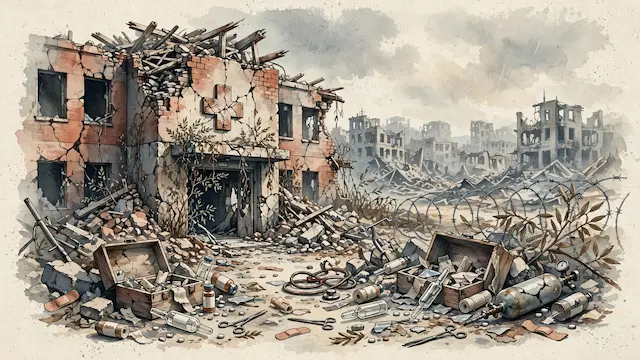
One year after a ceasefire, Gaza's hospitals continue to face severe shortages of medical supplies and diagnostic capabilities, hindering healthcare services. Melina Ansari, Director of the Occupied Territories Department at Physicians for Human Rights, stated that despite initial hopes for the ceasefire to alleviate Palestinian suffering and allow for the recovery of the war-torn health system, the situation remains dire. She noted a persistent lack of essential medical supplies, diagnostic and treatment equipment, and slow medical evacuations for critically ill patients.
Ansari highlighted that none of Gaza's 36 hospitals are operating at full capacity. The ongoing electricity crisis, with hospitals relying on generators due to a lack of consistent power and shortages of fuel, exacerbates the problem. She emphasized that humanitarian aid alone is insufficient without addressing the fundamental needs for electricity, water, and infrastructure.
The medical corridor for patients needing treatment unavailable in Gaza, particularly cancer patients, remains largely closed. Physicians for Human Rights filed a petition with the Israeli Supreme Court in November 2025 to reopen a medical passage to hospitals in the West Bank, including East Jerusalem. The court has yet to rule, with Israeli judicial sources attributing the delay to third countries not requesting patient evacuations.
Ansari criticized the notion that third countries are responsible for medical evacuations, asserting that Israel controls patient movement in and out of Gaza. She stated that approximately 20,000 patients require life-saving treatment, and the current evacuation routes to third countries do not meet the scale of need. Tragically, some patients awaiting evacuation have died, while waiting lists grow.
Furthermore, Ansari expressed concerns about the World Health Organization's (WHO) ability to import necessary equipment and medications, suggesting Israeli authorities impede some imports. While understanding the WHO's challenges, she urged the organization to be more assertive in its dealings with Israel, moving beyond what she described as "timid" statements. Human rights and humanitarian organizations also face significant restrictions and a difficult operating environment in Gaza, exemplified by the challenges faced by UNRWA and other institutions.
Mentioned
The same event, reported separately by each outlet. Open a few to compare what different newsrooms emphasize — and what they leave out.
Left 1Arab 3



Not the same event — other stories that share this one’s people, places, or theme: background, reactions, and follow-ups.