Palestinian Citizens of Israel Face Erosion of Rights and Power
Translated & summarized from Local Call by baba
Palestinian citizens of Israel are experiencing a significant erosion of their rights and political power, particularly since October 7th. Their citizenship, once a source of protection and potential influence, is becoming increasingly conditional and vulnerable to the whims of the majority and state power, leading to a sense of political powerlessness and a struggle to define their identity and belonging.
The story in 6 lines · by baba
- Palestinian citizens of Israel face diminishing rights and power since October 7th.
- Citizenship's protections are proving conditional, not inherent.
- Jewish citizens increasingly monitor Palestinian speech and protest.
- A deep contradiction exists between Israeli legal status and Palestinian national identity.
- The global shift towards power politics exacerbates the situation.
- There is a need to build political power beyond the current citizenship framework.
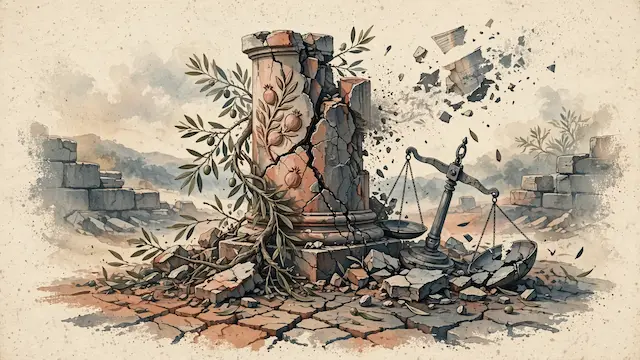
Palestinian citizens of Israel have learned in the three years since October 7th that their citizenship, once seen as a protective shield, can be rapidly diminished. This erosion is not always a formal revocation but a hollowing out of its substance, making rights conditional and dependent on the majority's restraint and the state's willingness to limit its own power. Jewish citizens are increasingly acting as gatekeepers, monitoring speech and protest, thereby defining the boundaries of legitimate citizenship.
Historically, Israeli citizenship offered advantages over Palestinians in the West Bank and Gaza, providing freedom of movement, social rights, and a degree of protection from state power. It even offered a fleeting illusion of political influence. However, the events since October 7th have revealed that these protections are not inherent to citizenship itself but are contingent on the majority's self-restraint and the state's institutional framework. Courts, academia, media, and political parties have proven less robust in defending these rights than anticipated.
The article highlights a deep contradiction: Israeli citizenship frames the country as the legal and political structure governing life, while Palestine represents national belonging. This tension escalates when citizenship demands national allegiance, pushing Palestinian identity into private spheres and making independent Palestinian national politics suspect. The ongoing conflict exacerbates this, forcing citizens to live within a state engaged in destructive actions against their kin, while their own avenues for protest and solidarity shrink.
The author, Dr. Amir Fakhoury, a sociologist and jurist, argues that this situation creates a trap where citizenship, intended to grant power and mobility, now necessitates living in a state that perpetuates violence against one's collective. This leads to a sense of political orphanhood, with no institution reliably standing between Palestinian citizens and the majority's power. The experience of the COVID-19 pandemic, which briefly fostered a sense of shared fate, has since faded, with professional contributions not translating into political legitimacy.
Furthermore, the article notes a shift in the global order towards a more power-based, less rights-focused international politics, with Israel increasingly embodying this trend. This has opened new avenues for Palestinian action internationally, focusing on restraining Israeli power for the potential rebuilding of the region for both peoples. The challenge lies in transforming this into a shared struggle with Israeli Jews who recognize the common danger of conditional citizenship and the need for genuine power to shape reality, rather than relying solely on the existing framework of citizenship.