
UK Green Party Adopts Resolution Declaring Zionism a Form of Racism
Translated & summarized from JDN by baba
The story in 5 lines · by baba
- UK Green Party conference passed resolution calling Zionism a form of racism.
- The resolution supports a single Palestinian state and rejects Israel's existence.
- The vote passed by a narrow margin, revealing internal party divisions.
- Israel's Foreign Ministry condemned the decision, calling the party a terror supporter.
- The Green Party is the first UK parliamentary party with an official anti-Zionist stance.
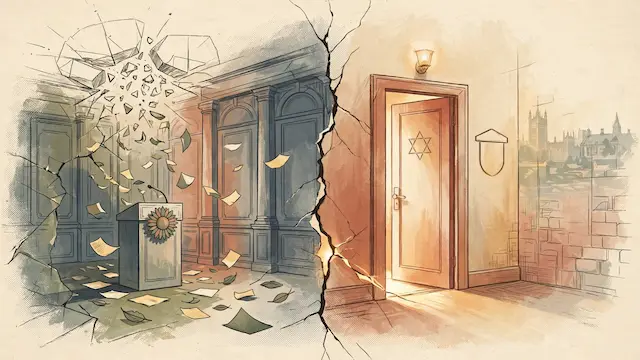
A significant diplomatic and political controversy erupted in Britain after the annual conference of the Green Party of England approved a resolution labeling Zionism as a form of racism. The resolution advocates for a single, unified Palestinian state between the sea and the river, explicitly rejecting the existence of Israel or the two-state solution. The official vote results from the conference in Brighton showed the proposal passing with 1,022 in favor and 813 against, out of 1,835 delegates and members participating. Approximately 55.7% of the 1,835 voting members supported the resolution. This decision was made despite strong opposition from senior party figures, including a former party leader and its first Member of Parliament, along with other MPs from the party. The current party leader abstained from the vote. The outcome reveals a deep internal division within the party, with the resolution passing by a narrow margin of 209 votes. The Green Party has now become the first party in the British Parliament to officially adopt an anti-Zionist stance. The Israeli Ministry of Foreign Affairs issued a sharp condemnation, stating that the UK Green Party has ceased to function as a legitimate political entity and has become a supporter of terrorism. The ministry further asserted that the party has officially embraced Hamas's ideology. Jerusalem urged all British parties, particularly the ruling Labour Party, to immediately and unequivocally disavow the resolution.
The same event, reported separately by each outlet. Open a few to compare what different newsrooms emphasize — and what they leave out.






















Not the same event — other stories that share this one’s people, places, or theme: background, reactions, and follow-ups.

