
British Green Party Faces Backlash Over Anti-Zionist Resolution
Translated & summarized from Israel Hayom by baba
The story in 6 lines · by baba
- British Green Party to vote on resolution calling Zionism racism.
- Resolution supports a single democratic Palestinian state.
- Jewish members express concern over potential disciplinary action.
- Former leaders criticize the resolution as harmful.
- Party leader Zac faces scrutiny over his anti-Zionist views.
- Controversy also surrounds 's family history narrative.
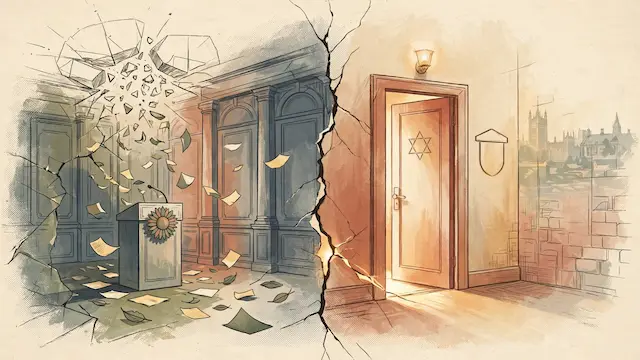
The British Green Party is set to vote on a resolution declaring Zionism a form of racism and supporting the establishment of a single democratic Palestinian state in all of historic Palestine, with Jerusalem as its capital. The proposal, which has caused internal controversy, is part of a sharp ideological shift led by party leader Zac , during the party's national conference. The resolution defines Zionism as a political ideology that called for and continues to advocate for a Jewish ethno-nationalist state in historic Palestine, while excluding or controlling the non-Jewish population. It further states that Zionism has manifested in the dehumanization, displacement, dispossession, and destruction of Palestinians, attributing this to colonial-settler systems. Supporters of the resolution propose treating Zionism like any other form of racism, ensuring equal rights and the right of return for Palestinians in the proposed single state. A clause clarifies the proposal targets the ideology and practice of Zionism, not individuals' ethnic or religious backgrounds. According to the Jewish Chronicle, Jewish party members may face disciplinary action for synagogue membership, as most British synagogues identify as Zionist. Two former party leaders, Caroline Lucas and Adrian Ramsay, have announced they will not support the resolution, with Lucas warning of a perception that Jews are unwelcome and Ramsay calling it unnecessary and unhelpful. himself, who sought amendments to protect Jewish members, will not attend the vote due to his election campaign commitments. Amidst the controversy, the Green Party has allocated a 'safe room' for Jewish members at the conference, with one member describing the situation as "very disturbing" but reflective of reality. Jewish members are reportedly using a separate entrance to avoid demonstrations. , who was raised in a Zionist household, has been attempting to appeal to Muslim and far-left communities, who form a significant support base for the Greens. The Labour and Reform UK parties have accused the Greens of sectarian campaigning and manipulating Muslim voters. recently called for Palestine Action to be removed from terror watchlists. The Greens and Labour are competing for pro-Palestinian voters, many of whom shifted from Labour to the Greens during the tenure of former Prime Minister Keir Starmer, who faced criticism for his pro-Israel stance. Labour, under current leadership, is attempting to win back these voters, with Foreign Secretary Ed Miliband stating, "We hear you" to those distressed by the Palestinian plight. publicly declared himself anti-Zionist about ten days prior, stating, "I am anti-Zionist, and I know that is difficult to hear in this room, but it is the truth," at an election event. His refusal to affirm Israel's right to exist drew boos and questions from the audience. is also facing scrutiny over inconsistencies in his family history narrative, which he has used to explain his political views. While he previously spoke of ancestors fleeing pogroms and Nazis, the Daily Mail revealed his grandparents were born in northern England before World War II. The party responded that Jewish family histories can be confusing and that it is "amazing" the only Jewish leader of a British party is having his family history scrutinized. This is not the first time has been caught in contradictions; past reports detailed misrepresentations of his professional credentials.
Mentioned
The same event, reported separately by each outlet. Open a few to compare what different newsrooms emphasize — and what they leave out.






















Not the same event — other stories that share this one’s people, places, or theme: background, reactions, and follow-ups.


