
Arab Parties' Disqualification Debate Highlights Israeli Political Tensions
Translated & summarized from Local Call by baba
The disqualification of Arab parties and candidates in Israel, exemplified by the case of Sami Abu Shehadeh, has sparked significant political debate regarding the civic and political status of Palestinian citizens. Supporters of disqualification cite concerns over incitement, while critics argue it represents a broader effort to silence Arab political voices and a double standard compared to remarks by Jewish officials. The controversy has impacted Arab voter support for parties involved.
The story in 5 lines · by baba
- Arab parties' disqualification debate highlights Israeli political tensions.
- Attempts to disqualify Arab parties are a recurring issue in Israeli elections.
- Critics argue disqualifications aim to silence Arab political representation.
- The debate exposes differing views on free speech for Arab citizens.
- Disqualifications have impacted Arab voter support for involved parties.
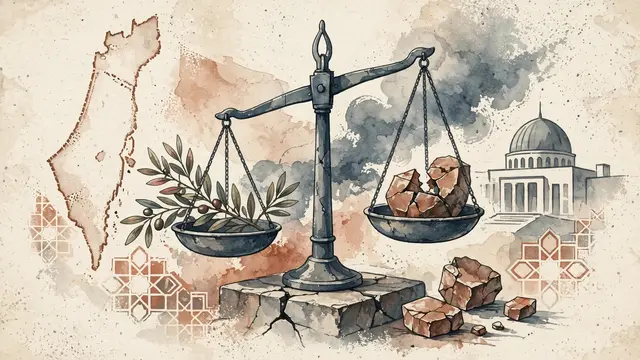
The recent push to disqualify Arab political parties, specifically Balad chairman Sami Abu Shehadeh, from participating in elections has ignited a deep political debate in Israel, extending beyond the issue of Palestinian citizens' participation. This controversy, occurring within both the broader Israeli public and Palestinian society, underscores the profound impact of the ongoing conflict on Israeli politics. The disqualification of Arab parties is not a new phenomenon, having recurred in various elections since the disqualification of the Al-Arad movement in 1965. A common thread in these attempts relates to the civic and political status of Palestinian citizens. Even when Jewish parties or candidates like Meir Kahane faced disqualification in the late 1980s, the arguments often stemmed from racist perceptions of the Palestinian public.
The current wave of disqualifications illustrates an escalation in the silencing of Arab politics. The support for Sami Abu Shehadeh's disqualification by the Democratic Party, for instance, reflects a broad Zionist consensus, from figures like Itamar Ben-Gvir to Yossi Golan, advocating for restricted free speech for Arab representatives. This is particularly striking given that Abu Shehadeh's statements are seen as minor compared to numerous racist remarks made by Jewish public officials in recent years, including calls for expulsion and destruction in Gaza, the West Bank, and within Israel. While Israel permits a wide range of free expression, even to the point of condoning violence against Arabs, Arab representatives are pressured to self-censor, fearing any statement could be misconstrued as support for terrorism or incitement.
The support for disqualification from figures like Yossi Golan suggests a lack of fundamental change in attitudes towards Arab society even within the "change bloc." Golan's subsequent explanation video, posted in Arabic, further complicated matters by justifying his stance on Abu Shehadeh's disqualification without addressing his reasons for not supporting the disqualification of the Ra'am party. This political maneuvering has had tangible consequences, with polls indicating a significant drop in support for the Democratic Party among the Arab public, costing them approximately 60,000 votes.
The involvement of the Attorney General and the decision by Central Elections Committee chairman, Supreme Court Justice Noam Sohlberg, to vote in favor of Abu Shehadeh's disqualification, a rare move for a committee chairman, creates an impression that the court may uphold the disqualification. This situation has fueled a heated debate on Arabic social media, with some calling for Abu Shehadeh to withdraw his candidacy to avoid setting a legal precedent. This reflects a broader sentiment within Palestinian society since the war began, urging caution and self-censorship due to fear of repercussions. While acknowledging the need for responsibility given the state's actions, the article argues there's a fine line between responsible behavior and depoliticization.
The attempt to disqualify a democratic party representing a national minority, and an individual advocating for equality, is framed as a political event with wide-ranging implications for Palestinian citizens in Israel, from bus drivers to doctors. Some within the Arab community advocate for temporary withdrawal from organized resistance, believing Israel's post-October 7th state of mind requires a pause. However, the article contends that silence in the face of oppression only leads to harsher repression. The expectation that disqualifications will stop with Abu Shehadeh or Balad ignores the broader trend of shrinking political space, potentially targeting other parties. Abu Shehadeh's withdrawal could be seen as acceptance of oppression, ironically mirroring an AI video by Otzma Yehudit suggesting future leaders would face consequences if they didn't change their ways. The article concludes that instead of retreating, Palestinian citizens should confront racism and incitement, as past political gains were the result of long-standing resistance. If Abu Shehadeh is disqualified, the stigma will fall on the court that approved a racist, anti-democratic decision.
Mentioned



