
Israeli Boy Dies After Contracting Brain-Eating Amoeba in Sea of Galilee
Translated & summarized from Kan News by baba
A nine-year-old Israeli boy has died from a brain-eating amoeba after swimming in the Sea of Galilee. The Health Ministry stated it cannot effectively mitigate the risk and advised the public to assess and manage their own risk until cooler temperatures reduce the amoeba's presence.
The story in 4 lines · by baba
- Nine-year-old boy died from brain-eating amoeba contracted in Sea of Galilee.
- Health Ministry admits it cannot mitigate the amoeba risk.
- Public is advised to assess and manage their own risk.
- Risk expected to decrease with cooler temperatures in late November.
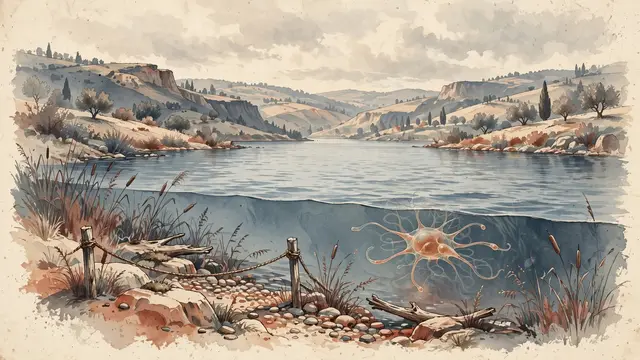
A nine-year-old boy from Pardes Hanna, Baruch Neria, has died after contracting a rare brain-eating amoeba, Naegleria fowleri, from the Sea of Galilee. He was hospitalized in serious condition two and a half weeks ago and succumbed to primary amoebic meningoencephalitis, an infection of the brain. Health Ministry officials confirmed the death on Thursday.
An epidemiological investigation revealed that Neria had been swimming at the Kinneret's Kursi beach about a week before his hospitalization. The amoeba, found primarily in warm freshwater sources, is extremely rare, with fewer than 500 cases reported globally and only four diagnosed in Israel in recent years. Infection occurs when water containing the amoeba enters the nose, allowing it to travel to the brain. The disease is not contracted by drinking water and is not contagious between people.
The Ministry of Health has stated that there are currently no effective measures that can be taken to mitigate the risk posed by the amoeba in the Sea of Galilee, effectively placing the responsibility for risk management on the public. Professor Sigal Sadetzki, head of Public Health Services, acknowledged that the ministry lacks the tools to accurately assess the risk level, identify the amoeba's locations, or measure its concentration in the lake's water. The primary challenge is the inability to perform environmental treatments or pest control in an open lake.
"We want to reflect the situation to the public and provide information so that the public can assess the risk and make their decisions," Professor Sadetzki stated, adding that finding the amoeba is like "looking for a needle in a haystack." She emphasized that the ultimate decision rests with the individual.
However, the Ministry of Health noted that the risk is expected to decrease significantly as the weather cools. Professionals estimate that the phenomenon will diminish once the water temperature in the Sea of Galilee drops below 24 degrees Celsius (75.2 degrees Fahrenheit), which is anticipated in the latter half of November. Until then, swimmers must decide for themselves whether to enter the water and how to protect themselves.
Mentioned
The same event, reported separately by each outlet. Open a few to compare what different newsrooms emphasize — and what they leave out.
Left 1Centre 7Right 5Haredi 2Arab 3Other 4
























