
Israeli Child Dies From Rare Brain-Eating Amoeba After Swimming in Sea of Galilee
Translated & summarized from Makan by baba
A nine-year-old Israeli boy died from a rare brain-eating amoeba after swimming in the Sea of Galilee. The Ministry of Health stated it cannot effectively control the amoeba in the lake and that the public must manage their own risk.
The story in 5 lines · by baba
- Nine-year-old Israeli boy died from brain-eating amoeba after swimming in Sea of Galilee.
- Infection caused by rare Naegleria fowleri amoeba, with few global and Israeli cases.
- Ministry of Health admits inability to control amoeba in the open lake.
- Public is responsible for assessing and managing personal risk.
- Risk expected to decrease as water temperatures fall below 24°C in late November.
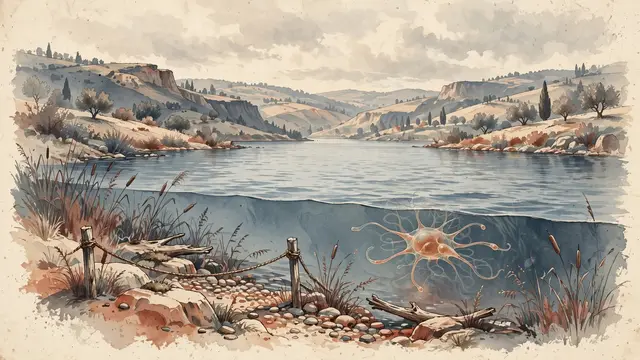
A nine-year-old boy, Baruch Neria from Pardes Hanna, has died from a rare brain infection caused by the amoeba Naegleria fowleri, after swimming in the Sea of Galilee. The child was hospitalized in serious condition approximately two and a half weeks ago. Epidemiological investigations revealed he had swum in the Kinneret's Kursi beach about a week before his hospitalization.
The Ministry of Health stated that the infection is extremely rare, with fewer than 500 cases recorded globally and only four diagnosed in Israel in recent years. The microscopic amoeba, known as "brain-eating amoeba," primarily thrives in warm, freshwater sources. Infection occurs when water containing the amoeba enters the nose, potentially reaching the brain, and is not transmitted through drinking water or person-to-person contact.
Despite the fatality, the Ministry of Health has acknowledged it lacks the means to effectively mitigate the risk of the amoeba in the Sea of Galilee. Professor Sigal Sadetsky, head of Public Health Services, explained that the ministry cannot accurately determine the risk level, locate the amoeba, or measure its concentration in the lake. She noted the difficulty in treating an open environment like the Sea of Galilee and emphasized that risk management responsibility now lies with the public.
"We want to present the situation to the public and provide them with information that enables them to assess the risks and make their decisions," Sadetsky said, comparing finding the amoeba to searching for a needle in a haystack. The Ministry of Health indicated that the risk is expected to decrease significantly as temperatures drop, with amoeba activity declining when the Sea of Galilee's water temperature falls below 24 degrees Celsius, anticipated in the latter half of November. Until then, the decision to enter the water and any preventative measures remain the responsibility of individuals.
Mentioned
The same event, reported separately by each outlet. Open a few to compare what different newsrooms emphasize — and what they leave out.
Left 1Centre 7Right 5Haredi 2Arab 3Other 4
























