Ada Yonath, Nobel Laureate in Chemistry, Dies at 87
Translated & summarized from Ynet by baba
Nobel laureate Professor Ada Yonath, a pioneering scientist at the Weizmann Institute of Science known for her groundbreaking research on the ribosome, has died at age 87. Her work elucidated the structure and function of the ribosome, significantly advancing the understanding of antibiotic mechanisms and the fight against bacterial resistance.
The story in 5 lines · by baba
- Nobel laureate Professor Ada Yonath died at 87.
- She pioneered research on the ribosome's structure and function.
- Her work advanced understanding of antibiotic mechanisms.
- She overcame significant scientific skepticism to achieve breakthroughs.
- Yonath received numerous international awards, including the Nobel and Israel Prize.
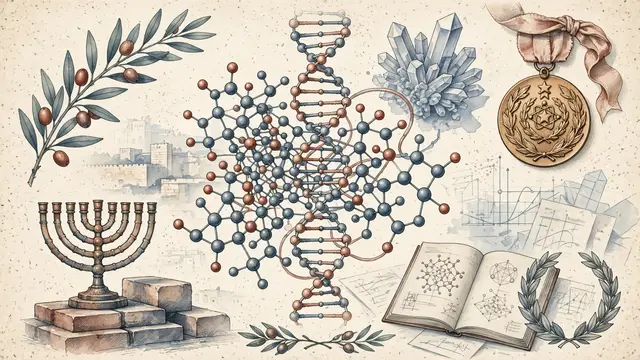
Professor Ada Yonath, the 2009 Nobel Prize laureate in Chemistry and recipient of the Israel Prize, has passed away at the age of 87. Yonath, a distinguished scientist at the Weizmann Institute of Science, was a pioneer in the study of the ribosome, the cell's protein-producing machinery. Her groundbreaking research, which spanned decades, elucidated the ribosome's structure and function, leading to a deeper understanding of how antibiotics work and paving the way for the development of new drugs to combat antibiotic-resistant bacteria.
Born in Jerusalem in 1939 to Polish immigrants, Yonath overcame humble beginnings and personal tragedy, including the early death of her father, to pursue her passion for science. She excelled in precise sciences from a young age, working various jobs to support her family while studying. After serving in the IDF's Medical Corps, she earned degrees from the Hebrew University of Jerusalem and a doctorate from the Weizmann Institute, where she later established the first laboratory in Israel for protein crystallography.
Yonath's scientific journey was marked by perseverance. Facing skepticism from the scientific community, she dedicated herself to crystallizing ribosomes, a feat many deemed impossible. After approximately 25,000 attempts, her team succeeded in creating the first ribosome crystals in 1980. Over the next two decades, she refined techniques, including cryo-bio-crystallography, which significantly reduced damage to biological crystals during X-ray analysis. In 2000, her teams achieved the first complete structural determination of the bacterial ribosome, a breakthrough recognized by the journal Science.
Her research further revealed how various antibiotics bind to bacterial ribosomes, inhibiting protein synthesis and offering insights into bacterial resistance mechanisms. This work has been crucial in designing new antibiotics and improving existing treatments. Yonath held numerous prestigious positions, including heading departments at the Weizmann Institute and leading a research group at the Max Planck Society in Germany.
Beyond her Nobel Prize, Yonath received dozens of international awards and honors, including the Israel Prize, the Wolf Prize in Chemistry, and honorary doctorates from numerous universities worldwide. She was a member of leading scientific academies globally. Despite her immense scientific achievements, she cherished the title "best grandmother in the world" bestowed upon her by her granddaughter. She is survived by her daughter, Dr. Hagit Yonath, and her granddaughter, Noa.
Mentioned
The same event, reported separately by each outlet. Open a few to compare what different newsrooms emphasize — and what they leave out.
Left 2Centre 7Right 4Haredi 1Other 2