Full coverage· Politics· Updated
Israeli Political Stalemate Leaves Government Formation Options Limited
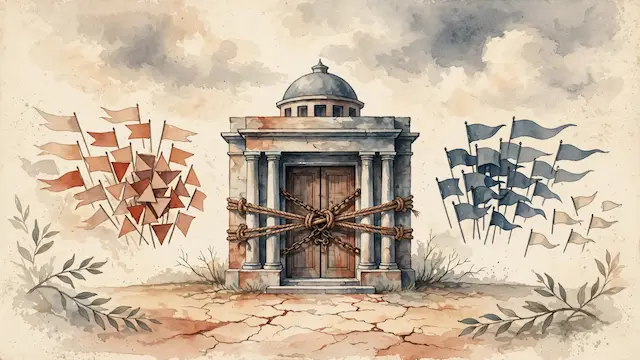
Israel's political landscape is in a deadlock after the 26th Knesset elections, with neither the "Netanyahu bloc" (53 seats) nor the "Change bloc" (48 seats, potentially 56 with Ra'am) able to form a majority government.
2 newsrooms · 2 languages · since

Plus
What happened
- 01Israeli political blocs are short of the 61 seats needed to form a government after the 26th Knesset elections.
- 02The "Netanyahu bloc" has 53 seats, while the "Change bloc" has 48 seats, potentially rising to 56 with Ra'am's support.
- 03Prime Minister Benjamin Netanyahu requires at least eight additional Knesset members for a majority.
- 04Potential unity government between Netanyahu and Gadi Eisenkot faces significant ideological and leadership hurdles.
- 05Without a compromise, Israel may be headed for another round of elections.
Prime Minister Benjamin Netanyahu needs at least eight more seats, while the opposition faces internal challenges regarding cooperation with Arab parties. The primary options appear to be significant political compromises leading to a unity government or a repeat election.
The coverage
2 newsrooms on this story
Who covered it
- LeftNone
- CentreNone
- Right1
- HarediNone
- ArabNone
- Other1
How it broke
See which of the 2 newsrooms broke it, and who waited





