Full coverage· Politics· Updated
Israeli Election Fallout: Scenarios for Government Formation
Israel's 26th Knesset elections on Tuesday have resulted in a political stalemate, with neither major bloc securing the 61-seat majority required to form a government. Prime Minister Benjamin Netanyahu's right-wing and ultra-Orthodox bloc holds 53 seats, while the opposition "change bloc" led by Gadi Eisenkot has 48 seats. Arab parties achieved a record high of approximately 19 seats, with Likud emerging as the largest single party with 26 seats.
7 newsrooms · 2 languages · since




What happened
- 01No political bloc secured the 61-seat majority in Israel's 26th Knesset elections, leaving the country in a political deadlock.
- 02Prime Minister Benjamin Netanyahu's bloc holds 53 seats, while Gadi Eisenkot's opposition bloc has 48 seats.
- 03Arab parties achieved a record high of approximately 19 seats, significantly increasing their potential influence in coalition talks.
- 04Voter turnout reached a record 77.7%, with particularly high participation reported in the Arab sector.
- 05President Isaac Herzog will begin consultations next week after receiving official results from Judge Noam Sohlberg.
- 06Naftali Bennett and Avigdor Lieberman have pledged not to join any government that relies on the support of Arab parties.
- 07The political system anticipates a high likelihood of repeat elections if neither bloc can successfully assemble a coalition.
The election saw a record voter turnout of 77.7%, driven by high participation in the Arab sector. President Isaac Herzog praised the turnout and announced he would begin consultations next week after receiving the official results from Central Elections Committee Chairman Judge Noam Sohlberg. President Herzog urged all party leaders to act with political responsibility and work to avoid a repeat election.
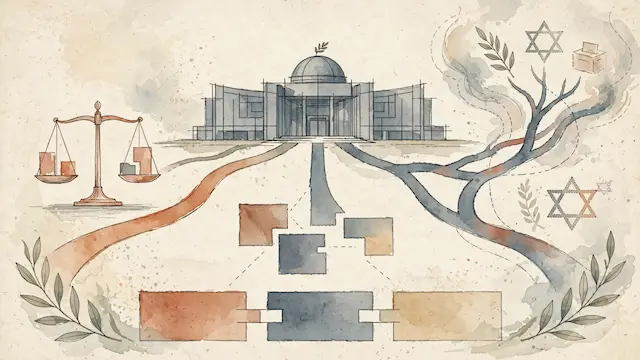
Three primary scenarios have emerged for resolving the deadlock. The first is a Netanyahu-led government, which would require him to either attract defectors from the opposition bloc, expand his coalition by bringing in Naftali Bennett or Avigdor Lieberman, or form a broad unity government. However, Eisenkot has reportedly stated he would refuse a unity arrangement with Netanyahu.
The second scenario is a government led by Eisenkot, which would require the active support of Arab parties, including Mansour Abbas's Ra'am and the Joint List. While Yair Golan has advocated for this option, it faces significant obstacles as Bennett and Lieberman have pledged not to join a government supported by Arab parties.
If neither leader can assemble a coalition, Israel faces the third scenario of repeat elections. Analysts and political figures increasingly view a new round of elections as a highly likely outcome due to deep ideological divisions and the binding campaign promises made by various party leaders.
Summarized by baba from the reports of 7 newsrooms. Updated
Latest report: Mako. Read Mako’s originalThe coverage
7 newsrooms on this story
Who covered it
- Left1
- Centre3
- Right2
- Haredi1
- ArabNone


How it broke
How the headlines differ
Israeli Election Fallout: Scenarios for Government Formation

