
US Midterm Election Results Spark Debate on Israel-US Relations
תורגם ותומצת מתוך i24NEWS Arabic על ידי baba
US midterm election results giving Democrats control of Congress have sparked debate in Israel about the future of US-Israel relations. Analysts Mark Shulman and Dr. Meir Masri offered differing perspectives, with Shulman citing damage to Israel's image and Netanyahu's partisan strategy, while Masri emphasized the resilience of strategic interests and presidential authority. The discussion highlighted generational shifts, evolving views on lobbying groups, and economic concerns influencing American voters.
הידיעה ב-5 שורות · תקציר של baba
- US midterm elections granting Democrats control of Congress have raised questions about the future of US-Israel relations.
- Analyst Mark Shulman believes Israel's image has suffered due to prolonged wars and Netanyahu's reliance on Republicans.
- Analyst Dr. Meir Masri argues the US-Israel alliance is resilient, based on strategic interests and presidential power.
- Younger American voters are increasingly critical of military spending and foreign wars.
- Israel faces a challenge in maintaining bipartisan support in Washington following the elections.
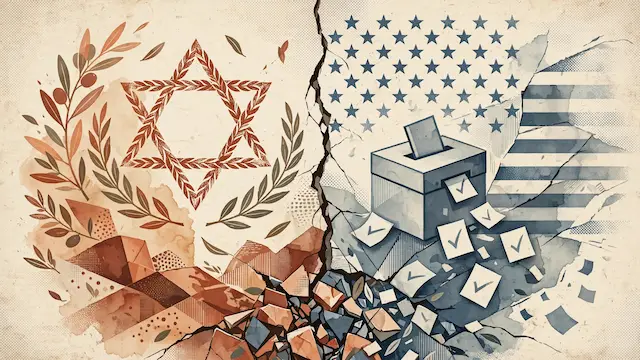
The recent US midterm election results, which saw Democrats secure full control of both the Senate and the House of Representatives, have triggered widespread discussion and analysis within Israeli political and media circles regarding their potential impact on the strategic relationship between the US and Israel. These outcomes follow notable statements by Republican figure J.D. Vance, who suggested that many American voters chose Democrats to end foreign wars and re-evaluate the alliance with Israel.
During a televised discussion on i24NEWS, analysts Mark Shulman, a writer for Newsweek, and Dr. Meir Masri, a professor of Political Science at Polytechnic University in Jerusalem, presented contrasting views. Shulman argued that Israel's image in the US has been significantly damaged, attributing this to prolonged wars that contradict traditional military doctrine and have depleted international and American support. He also criticized Israeli Prime Minister Benjamin Netanyahu's reliance on the Republican Party, which he believes has created a deep rift with the Democratic Party that will require extensive diplomatic effort to mend, especially with a new generation of American politicians viewing foreign relations differently.
Conversely, Dr. Masri downplayed fears of a radical deterioration in relations, emphasizing the US president's broad authority in foreign policy independent of congressional majorities. Masri stated that the primary drivers for American voters in this election were domestic economic issues, such as rising energy prices. He asserted that the US-Israel alliance remains strong, founded on deep, shared strategic and security interests that are not entirely swayed by election outcomes.
The discussion also highlighted structural shifts in the US, including demographic and generational changes where younger Americans are more critical of military policies and hesitant to fund foreign wars. The influence of lobbying groups like AIPAC is also evolving, with some Democrats viewing it as a partisan tool, leading to pushback against political funding in campaigns. The article also noted that Washington's involvement in confronting Iran and the resulting economic inflation were sensitive issues exploited by opponents during the election.
Ultimately, the discussion concluded that Israel faces a period requiring a reassessment of its diplomatic communication strategies and a need to engage with the entire American political spectrum. Maintaining bipartisan support in Washington is seen as a significant future challenge for Tel Aviv.
מוזכרים
אותו אירוע, כפי שכל מערכת דיווחה עליו בנפרד. פתחו כמה דיווחים כדי להשוות מה כל מערכת מדגישה, ומה היא משאירה בחוץ.
שמאל 1מרכז 4ערבית 1





לא אותו אירוע: ידיעות אחרות שחולקות עם הידיעה הזו אנשים, מקומות או נושא. רקע, תגובות והמשכים.



