
Israeli Election Stalemate: Coalition Options Narrow as No Bloc Secures Majority
Following Israel's 26th Knesset elections, no bloc has secured a majority, creating a political deadlock. Prime Minister Netanyahu is exploring options like forming a unity government or seeking support from parties like Bennett's or Lieberman's. The left bloc may need support from all Arab parties, including Ra'am and the Joint List, to form a coalition. A repeat election remains a possibility if no majority government can be formed.
הידיעה ב-6 שורות · תקציר של baba
- No political bloc secured the 61 seats needed for a majority government in Israel's 26th Knesset elections.
- Prime Minister Netanyahu is considering options including a unity government or seeking support from Naftali Bennett or Avigdor Lieberman.
- The left-wing bloc may require support from all Arab parties, including Ra'am and the Joint List, to form a coalition.
- Recruiting defectors from other parties is another potential strategy for Netanyahu to gain a majority.
- A repeat election is a possibility if no coalition can be formed, mirroring past political instability.
- Vote counting continues, and shifts in seat distribution could impact coalition negotiations.
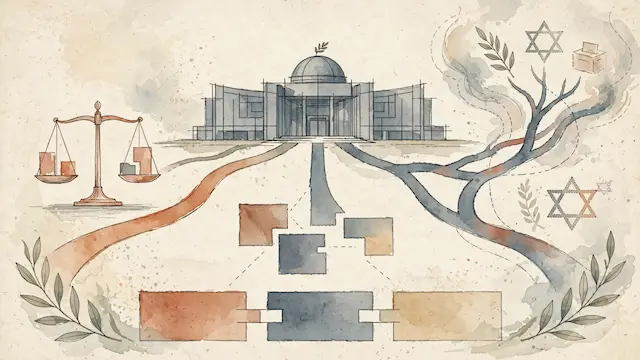
Following the 26th Knesset elections, Israel's political system faces a complex deadlock, with neither the right-wing nor the left-wing bloc securing the necessary 61 seats for a majority government. Prime Minister Netanyahu is reportedly considering strategies to broaden the right-wing bloc, potentially by approaching Naftali Bennett or Avigdor Lieberman to join his government. Another option for Netanyahu is forming a "unity government" that would involve a wider coalition of parties.
Alternatively, Netanyahu might seek to recruit "defectors" from other parties to achieve the required majority, bypassing the need for a full party agreement. Meanwhile, the left-wing bloc faces its own challenges in forming a coalition. To reach a majority, they would likely need the support of all Arab parties, including Ra'am, led by Mansour Abbas, and the Joint List, which includes Balad and Ta'al, associated with Ahmad Tibi. This potential cooperation is seen as complicated due to significant political differences between these parties.
A further scenario, undesirable for all political camps, is a repeat election. If Netanyahu fails to gather enough partners and the opposing bloc also cannot form a government, Israel could face another round of elections, reminiscent of the political instability seen in 2019. As vote counting continues, any shift in the seat distribution could impact coalition negotiations, with the key to forming the next government potentially lying with smaller parties deciding whether to join one of the main blocs or leave both without a majority.
מוזכרים
אותו אירוע, כפי שכל מערכת דיווחה עליו בנפרד. פתחו כמה דיווחים כדי להשוות מה כל מערכת מדגישה, ומה היא משאירה בחוץ.
שמאל 1מרכז 5ימין 2חרדית 1









לא אותו אירוע: ידיעות אחרות שחולקות עם הידיעה הזו אנשים, מקומות או נושא. רקע, תגובות והמשכים.




