
Israel Election Forecast Uncertain Amid Deep Political Divide
תומצת מתוך Bizportal על ידי baba
Israelis head to the polls tomorrow in an election marked by a deep divide between the Netanyahu and change blocs, with pollsters struggling to predict the outcome. Key factors influencing the vote include the ongoing war, the composition of the blocs, campaign strategies, and the potential for internal divisions within the change bloc. The results may remain uncertain even after polls close, with potential surprises and challenges for both major political factions.
הידיעה ב-6 שורות · תקציר של baba
- Israeli elections face unpredictable outcomes due to a deep ideological divide between the Netanyahu and change blocs.
- The ongoing war and controversial policies like judicial reform may impact the Netanyahu bloc's support.
- The change bloc struggles with internal disagreements on a prime ministerial candidate and fulfilling campaign promises.
- Campaign strategies, including fear-based tactics by Netanyahu's bloc, could alienate voters.
- High voter turnout is expected to favor the change bloc, while some smaller parties may fail to pass the threshold.
- The final government composition may remain unclear even late on election night.
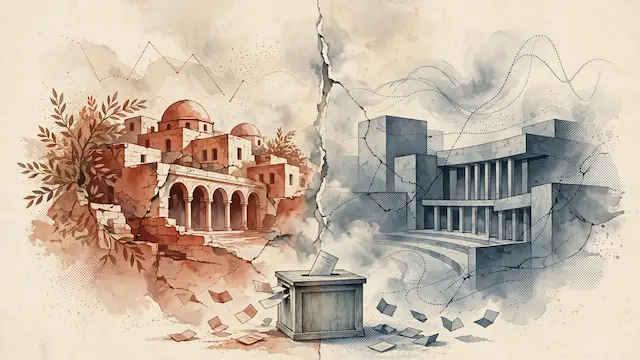
With less than 24 hours until election day, Israeli pollsters face significant challenges in predicting the outcome due to a deep ideological chasm between the two main blocs: the Netanyahu bloc and the change bloc. The uncertainty is amplified by two parties, led by Zelicha and Winter, hovering around the electoral threshold, making their final vote count unpredictable.
Several factors could impact the Netanyahu bloc's performance. The ongoing war, which began on October 7th, introduces an unknown variable that might negatively affect Netanyahu's bloc. This election also marks the first time Netanyahu's bloc is running after a full term of a right-wing government. Unlike previous elections where Netanyahu included more moderate figures like Moshe Kahlon, Yair Lapid, Shimon Peres, and Avigdor Lieberman, his current government is supported by parties further to the right, leading to controversial decisions such as the judicial reform, which could alienate voters.
Furthermore, the composition of Netanyahu's bloc appears less cohesive this time. Ofer Winter is running independently, and other parties like Noam and the Religious Zionist Party have a low chance of crossing the electoral threshold, potentially splitting the right-wing vote. Netanyahu is also running without prominent figures who previously bolstered his list, such as former Chiefs of Staff Bogi Ya'alon and Yoav Gallant, who were perceived as more moderate. The current list lacks charismatic figures who could attract significant votes.
Another key concern for Netanyahu's bloc is a campaign strategy perceived as relying on fear rather than hope. A campaign heavily focused on fear, including extreme imagery, might deter a portion of the electorate seeking a more hopeful message.
For the change bloc, the primary challenge is the lack of a unified candidate for prime minister. Despite rhetoric about post-election agreements, deep disagreements persist regarding who would lead the government. This internal division could create significant difficulties, especially in the crucial period following the election. The bloc also faces the challenge of fulfilling campaign promises, particularly if they rely on support from Arab parties, with Mansour Abbas's party being a key factor.
Avigdor Lieberman and Yisrael Beiteinu's public statements could also constrain Gadi Eisenkot, who is expected to attempt forming the next government. While navigating these commitments is possible, it will require considerable flexibility. High voter turnout, especially above 73%, is expected to benefit the change bloc. Potential election surprises include Bennett, who has run a strong campaign among young voters and Likud strongholds, and Ben-Gvir, who may gain at Netanyahu's expense. Lieberman might be disappointed due to a confusing campaign, while the Likud could face disappointment due to the impact of October 7th and the fear-based campaign. Arab parties are expected to gain strength due to their union, while Zelicha and Winter might not pass the electoral threshold. It is highly probable that the final government composition will remain unclear even late on election night.
מוזכרים
אותו אירוע, כפי שכל מערכת דיווחה עליו בנפרד. פתחו כמה דיווחים כדי להשוות מה כל מערכת מדגישה, ומה היא משאירה בחוץ.
מרכז 1אחרים 1

לא אותו אירוע: ידיעות אחרות שחולקות עם הידיעה הזו אנשים, מקומות או נושא. רקע, תגובות והמשכים.

