
Iran Seeks Sanctions Relief and a Wider Ceasefire as Talks with the US Open in Switzerland
Iran and the United States are holding critical talks in Burgenstock on Sunday as fighting in Lebanon, tensions over the Strait of Hormuz, and Iran's economic crisis escalate. Tehran is demanding a comprehensive ceasefire, sanctions relief, frozen assets, and oil export guarantees, while Washington is trying to avert a wider regional war.
הידיעה ב-5 שורות · תקציר של baba
- Talks between Iran and the US opened Sunday at 2:00 p.m. in Burgenstock.
- Tehran demands an all-fronts ceasefire, especially in Lebanon, before final negotiations.
- Iran seeks $12 billion in frozen funds and $300 billion in investment.
- The Strait of Hormuz remains disputed after Iran said it closed it.
- President Pezeshkian admitted inflation above 50 percent threatens Iran's economy.
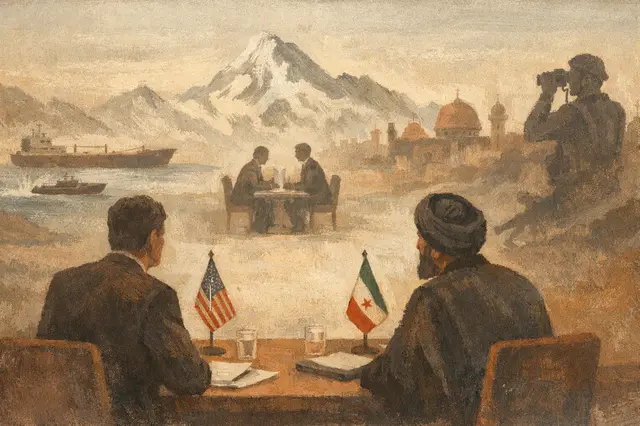
Iranian and US representatives are set to meet on Sunday at 2:00 p.m. in Burgenstock for a decisive round of talks, with Vice President J.D. Vance joining the international delegations at the site. The meeting comes amid fighting in Lebanon, uncertainty over the Strait of Hormuz, and a severe economic crisis inside Iran.
Tehran has made a sweeping ceasefire across all fronts its precondition for progress. Foreign ministry spokesman Esmail Baghaei said Lebanon is the central issue and that the "Zionist regime" is violating its commitments. He said the Islamic Republic is determined to ensure the other side implements the understandings, and that today's meeting in Switzerland is meant to follow up on a June 18, 2026 memorandum on ending the war.
According to Baghaei, the sides cannot move to final-status negotiations unless key clauses are carried out first, especially clause 1, which calls for an end to the war on all fronts, including Lebanon. He said the talks will also focus on clause 10, Iran's oil exports, and clause 11, the release of frozen Iranian assets. Iranian reports say Mohammad Bagher Qalibaf met in Burgenstock with Qatar's Prime Minister Mohammed bin Abdulrahman Al Thani to discuss the draft understanding, including Iran's demand for $12 billion in frozen funds and $300 billion in investment to rebuild its economy.
The Strait of Hormuz remains a flashpoint. Iran said on Saturday it had closed the waterway in response to the war in Lebanon, while US officials said it is still open. Maritime authorities have not definitively resolved the conflicting claims, leaving energy markets in turmoil. Meanwhile, President Masoud Pezeshkian publicly acknowledged Iran's economy is nearing collapse, saying inflation above 50 percent, or even 60 percent, is unacceptable. Israel said it would maintain a ceasefire beyond the yellow line in Lebanon to allow the talks to proceed, and the next hours in Switzerland are seen as crucial for whether the sides can secure a real truce or slide toward wider conflict.
מוזכרים
אותו אירוע, כפי שכל מערכת דיווחה עליו בנפרד. פתחו כמה דיווחים כדי להשוות מה כל מערכת מדגישה, ומה היא משאירה בחוץ.
מרכז 3ימין 2חרדית 2





