
U.S. and Iran Open Swiss Talks as Hormuz Threats and Lebanon Fighting Continue
U.S. and Iranian delegations began Swiss talks on Sunday to implement last week’s memorandum of understanding, with Pakistan also joining the effort. The meeting comes amid Iranian threats over the Strait of Hormuz and ongoing Israeli-Hezbollah clashes in Lebanon.
הידיעה ב-5 שורות · תקציר של baba
- U.S. and Iranian delegations opened talks in Switzerland on implementing last Wednesday’s agreement.
- Pakistan’s prime minister and army chief joined the diplomatic meetings.
- Iran claimed it closed the Strait of Hormuz, while U.S. Central Command denied any disruption.
- Israel said Hezbollah fired over 50 rockets and that it struck about 300 targets in two days.
- J.D. Vance said the talks aim to advance nuclear and Lebanon ceasefire issues.
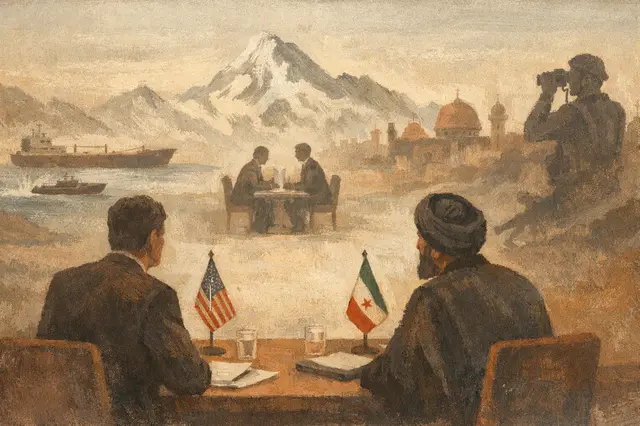
Delegations from the United States and Iran began talks in Switzerland on Sunday to discuss implementing the memorandum of understanding signed last Wednesday. The Iranian side is led by Foreign Minister Abbas Araghchi and negotiator Mohammad Baqer Qalibaf, while the American team is headed by Vice President J.D. Vance, with envoys Steve Witkoff and Jared Kushner handling the technical discussions.
Pakistan joined the diplomatic effort, saying Prime Minister Shehbaz Sharif and army chief Gen. Asim Munir traveled to Switzerland for meetings with both delegations. Pakistan’s foreign ministry said it would “continue to support the implementation of the memorandum of understanding.”
The talks opened against the backdrop of a dispute over the Strait of Hormuz. Iran’s Revolutionary Guard said the shipping lane was closed, citing “Israeli crimes” in Lebanon and alleged U.S. violations of the ceasefire commitments. U.S. Central Command rejected the claim, saying monitoring data showed dozens of commercial vessels moving normally through the strait and carrying millions of barrels of oil to global markets.
At the same time, fighting in Lebanon continued. Israel said Hezbollah fired more than 50 rockets overnight at Israeli forces in southern Lebanon, a breach of the ceasefire. In response, the IDF struck dozens of terror targets, including rocket launch sites, weapons depots and Hezbollah command posts. A senior political source said the prime minister had reiterated that Israel would remain in the security zone as long as necessary to protect the northern border, and ordered strong responses to any Hezbollah attack. The source said that over the past two days Israeli forces had struck about 300 terror targets and killed about 100 militants, adding, “If Hezbollah returns to attack us, we will hit it again with force.” Vance said before departing for Switzerland that the meeting was an attempt to make progress on the nuclear issue and the ceasefire in Lebanon. Under the deal, the ceasefire was set for 60 days, and President Donald Trump said no transit fees would be imposed in the Strait of Hormuz during that period, with the decision to be reviewed based on negotiations.
מוזכרים
אותו אירוע, כפי שכל מערכת דיווחה עליו בנפרד. פתחו כמה דיווחים כדי להשוות מה כל מערכת מדגישה, ומה היא משאירה בחוץ.
מרכז 3ימין 2חרדית 2





