
Iran and U.S. Head to Switzerland Talks Amid Lebanon Tensions
Iran and the United States are set to begin talks in Switzerland at the Bürgenstock resort despite Iran’s threat to close the Strait of Hormuz. The agenda is expected to include Lebanon and Iran’s nuclear program, amid intense fighting in Lebanon and accusations that Tehran is trying to split Israel from Washington.
הידיעה ב-5 שורות · תקציר של baba
- Iran and the U.S. are expected to open talks Sunday in Switzerland.
- CBS said an emergency Israel-Hezbollah session was added to the agenda.
- Tehran says Lebanon must be resolved before formal nuclear talks proceed.
- The U.S. says Hormuz remains open and is monitoring the situation.
- Israel says Iran is trying to deepen the rift with Washington.
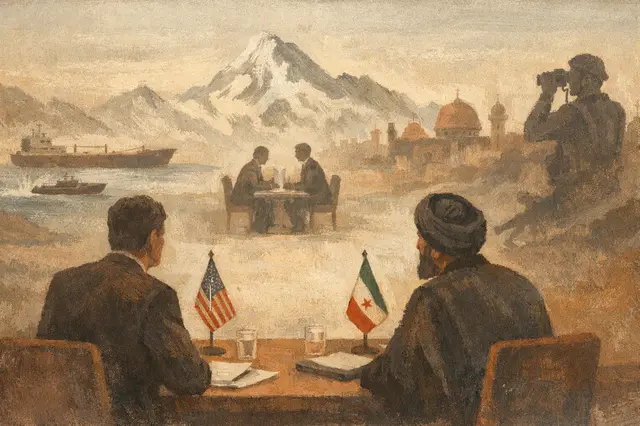
Just 48 hours after President Donald Trump signed a memorandum of understanding in Paris, Iran announced it was closing the Strait of Hormuz, citing what it called “continuous violations” in Lebanon. Despite that threat, and without any follow-up announcement since then, negotiations between Iran and the United States are expected to begin Sunday in Switzerland, at the Bürgenstock resort. Both sides confirmed they will attend, and if they meet face to face, it will be the first direct talks between Washington and Tehran since the 14-point memorandum was signed.
CBS reported overnight that an emergency session on Israel and Hezbollah has been added to the Swiss agenda and is expected to be the first discussion. Trump said Iran will not be allowed to collect transit fees in Hormuz for the 60-day ceasefire period or afterward unless the U.S. imposes them. Iran’s delegation will be led by parliamentary speaker Mohammad-Bagher Ghalibaf, with Foreign Minister Abbas Araghchi alongside him. On the U.S. side, Steve Witkoff and Jared Kushner are present, and Vice President JD Vance is also flying to Switzerland.
The mediation is again being handled by Qatar and Pakistan, led by Pakistani Prime Minister Shehbaz Sharif and army chief Asim Munir. The talks come after a weekend in which more than 110 people were reported killed in Israeli strikes in Lebanon, and after Iran’s dramatic threat to close Hormuz and launch missiles at Israel. The U.S. military later said the strait had not been closed, remained open, and that American forces were monitoring the situation.
Israeli ambassador to the U.S. Yechiel Leiter said Hezbollah fired 147 rockets, 20 explosive drones and nine anti-tank missiles in one day, killing Magen unit fighter Staff Sgt. Nir Ben Ari and wounding 13 others, one day after the tank disaster in which Lt. Col. Dor Ben Shimon, Staff Sgt. Yoav Klein, Staff Sgt. Liav Kababia and another soldier were killed. In Israel, officials believe Iran is trying to widen the rift between Israel and the United States, create a new equation that would stop Israel from operating across Lebanon, and pressure Washington by encouraging Hezbollah to violate the ceasefire and provoke an Israeli response. The Americans, meanwhile, want calm so the agreement can move forward, and according to CNN the key agenda items include Lebanon and Iran’s nuclear program, especially the unresolved issue of enriched uranium.
מוזכרים
אותו אירוע, כפי שכל מערכת דיווחה עליו בנפרד. פתחו כמה דיווחים כדי להשוות מה כל מערכת מדגישה, ומה היא משאירה בחוץ.
מרכז 3ימין 2חרדית 2





