
Syria Reverses Decision, Declares Right to Retain Nuclear Material for Peaceful Use
Translated & summarized from Ynet by baba
Syria has retracted its earlier agreement to remove nuclear material from a secret site, asserting its right to retain it for peaceful uses under IAEA supervision. This reversal follows diplomatic negotiations involving the U.S. and Israel, who have closely monitored Syria's nuclear remnants since the destruction of its secret reactor in 2007. Israel condemned Syria's stance and has taken military steps to restrict access to sensitive sites.
The story in 6 lines · by baba
- Syria reverses decision, keeps nuclear material for peaceful purposes under IAEA guarantees.
- Foreign Minister Assad al-Shibani announces advanced cooperation with IAEA despite legacy issues.
- Syria condemns Israeli airstrikes and calls for an end to Israeli violations.
- IAEA visit and planned removal of nuclear material last week now denied by Syria.
- Site 99 stores yellowcake uranium and nuclear remnants, monitored closely by Israel and U.S.
- Israel bombed Site 99 entrances post-Assad regime to block access to nuclear material.
One week after Syria agreed to allow the International Atomic Energy Agency (IAEA) to remove nuclear material from a secret site, Syrian Foreign Minister Assad al-Shibani reversed this decision on Tuesday. Speaking at a joint press conference with IAEA Director General Rafael Grossi, who recently visited Damascus, al-Shibani announced that the nuclear material would remain in Syria for "peaceful purposes" under guarantees provided to the IAEA. He emphasized Syria's right to use the material for civilian applications and highlighted advanced cooperation stages between Syria and the IAEA, while addressing the legacy of the previous regime's nuclear activities.
Al-Shibani also condemned Israel for reportedly carrying out an airstrike in Syria the previous night, reaffirming Syria's sovereignty and calling for an immediate end to Israeli violations. Last week, the Syrian Atomic Energy Commission had announced the IAEA delegation's planned visit and confirmed the removal of the nuclear material, a claim now denied by Damascus.
According to Israeli and American sources, the IAEA's presence in Syria followed diplomatic arrangements brokered by the Trump administration involving Syria and Israel. These negotiations reportedly involved months of intense diplomatic and threat exchanges before reaching a resolution. The former Assad regime developed a covert nuclear program centered on a secret reactor at Al-Kibar, which Israel destroyed in 2007. Although most of the program was dismantled, some research and storage sites remained largely inactive.
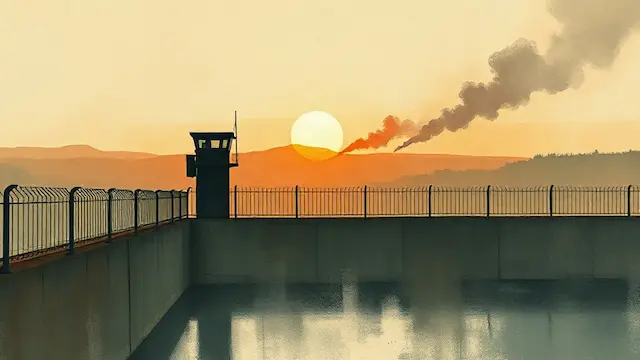
Following the regime change, the IAEA signed an agreement with the new Syrian government to inspect Al-Kibar and other related sites. One such site, known as "Site 99," has been closely monitored by Israel over the past two years. Israeli and American officials revealed that Site 99 stored nuclear material, including yellowcake uranium powder, remnants from the Al-Kibar reactor. While the material cannot produce nuclear weapons, it could be used to create a "dirty bomb," dispersing radioactive contamination without a nuclear explosion.
The Israeli Defense Forces reportedly bombed the entrances to Site 99 shortly after the Assad regime's fall to prevent access. For over a year, Israel and the U.S. National Security Council collaborated closely to determine how to handle Site 99, with Israel making clear it would not accept the nuclear material remaining there.
Mentioned



