Rabies Investigation: Veterinarian Faces License Revocation After Woman's Death
Translated & summarized from Ynet by baba
An investigation into a fatal rabies case in Israel revealed significant failures, including a two-month delay in diagnosing the disease in a woman who died after adopting an infected dog. The dog's body was not tested for rabies, and the veterinarian who treated it may lose his license. The incident has led to public health concerns, mass vaccinations, and calls for a national policy change to prevent future outbreaks.
The story in 5 lines · by baba
- A woman died of rabies after adopting a dog, prompting a severe investigation into the handling of the case.
- The veterinarian who treated the infected dog faces a hearing and potential loss of license due to procedural failures.
- A two-month gap existed between the dog's death and the human diagnosis, with the dog's body not initially tested for rabies.
- Numerous individuals and animals were exposed, leading to mass vaccinations and quarantines in affected communities.
- Health officials are calling for a national policy change to improve rabies prevention and management in Israel.
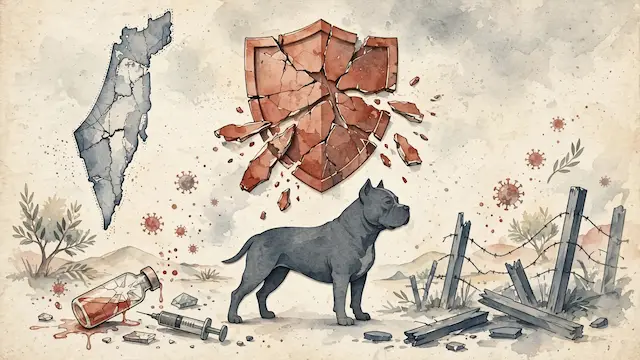
A difficult investigation into a rabies case that resulted in a woman's death has revealed significant failures, according to a report released Sunday by the Ministry of Agriculture's Veterinary Services. The probe found a gap of over two months between the death of the dog and the diagnosis of rabies in the woman who had adopted it. Crucially, the dog's body was not sent for rabies testing, and suspicion of the disease only arose after the woman was diagnosed.
The veterinarian who treated the dog is now facing a hearing and could lose his license. The dog, an American Bully breed, originated from Ne'alim, a known rabies hotspot. It was bred without a valid rabies vaccine, and one of the puppies was sold and eventually ended up in Kfar Ruth. Due to its owners' divorce, the puppy was left alone, escaped, and wandered the area.
In late August, an animal welfare activist took the dog and gave it to a friend in Kfar Samuel to foster. The dog slept in the same bed as the woman who later died, though there's no evidence she was bitten. Her sister was bitten but had been vaccinated for rabies prior to traveling abroad.
The dog was first seen by a vet on September 1st for a general check-up and deworming. On September 8th, it underwent spaying and received a rabies vaccination. The following day, the owners reported the dog was weak and struggling to walk. It died on the veterinarian's treatment table on September 9th. The report states the dog's body was not tested for rabies because the neurological symptoms were mistakenly attributed to anesthesia side effects from the spaying surgery.
Meanwhile, the woman's condition deteriorated. She sought medical attention on October 30th and was hospitalized on November 6th. Rabies was only confirmed by a laboratory on November 18th, but by then, her condition had worsened significantly, and she was moved to intensive care, ultimately succumbing to the disease. The investigation identified numerous individuals exposed to the dog, including residents of the properties where it stayed, neighbors, and those who took it to foster care. A wedding with approximately 150 guests and 30 staff members was also held at the foster family's home about a month and a half after the dog's death, raising concerns about further exposure.
In response to the incident, emergency task forces were established, and booster vaccinations were administered to dogs and cats in the affected areas. Animals without proper vaccination histories were euthanized or placed in quarantine. The Nature and Parks Authority also conducted controlled culling of foxes and jackals within a three-to-five-kilometer radius of the incident's epicenter. The Veterinary Services are investigating the dog's owners and have issued quarantine orders for animals that had confirmed contact with it. The region has seen eight documented cases of rabies in stray dogs and wildlife in the past six months, indicating it is an endemic area.
Dr. Michael Ettinger, Chairman of the Israel Veterinary Association, called the incident a severe rabies case requiring a policy change, not just public warnings. He urged a national rabies management and prevention plan, including separating rabies vaccination from licensing fees, proactive door-to-door vaccination campaigns in affected areas, mandatory vaccinations for at-risk veterinary and medical staff, and establishing an inter-ministerial committee with a unified national information system for tracking vaccinations, rabies cases, and exposures. He also stressed the need for stronger enforcement regarding stray animals and a mandatory protocol for testing animals with sudden neurological symptoms or death for rabies before euthanasia.
Keep up with
Mentioned
The same event, reported separately by each outlet. Open a few to compare what different newsrooms emphasize — and what they leave out.
Centre 3Right 1Other 1




Not the same event — other stories that share this one’s people, places, or theme: background, reactions, and follow-ups.