
US Weighs Iran Strike Amid Israeli Pressure, Trump Delays Decision
Translated & summarized from Ynet by baba
U.S. officials anticipate President Donald Trump will delay a decision on striking Iran for at least a week, despite Israeli pressure for an offensive. Trump indicated a leaning towards an attack after the New Year, but internal U.S. debate continues. Israel advocates for an intensive strike to weaken Iran's regime, while some U.S. advisors question its effectiveness. Qatar is mediating, and Israel has raised its alert level for various potential scenarios.
The story in 5 lines · by baba
- President Trump is expected to delay a decision on striking Iran for at least a week.
- Israel is pressuring the U.S. for an intensive strike to weaken Iran's regime.
- U.S. officials assess that an immediate attack on Iran would not be beneficial.
- Qatar is attempting to mediate between the U.S. and Iran to prevent further escalation.
- Israel has increased its alert level in anticipation of potential Iranian or U.S. actions.
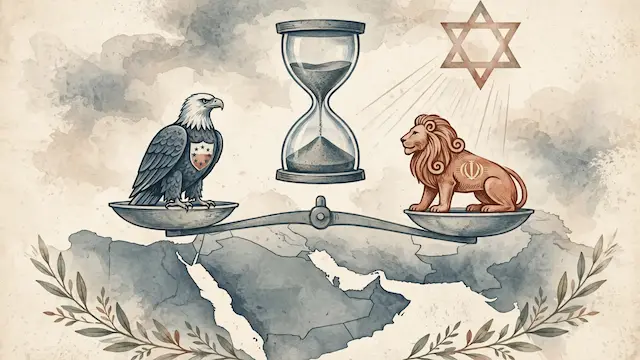
U.S. officials believe President Donald Trump will wait at least a week before deciding on a potential strike against Iran, despite heightened tensions. The administration's assessment is that an immediate attack would not be beneficial for the United States. Trump himself indicated to Fox News on Sunday that he was "leaning" towards ordering an attack after the New Year, though the timing remains unclear, especially with the new Congress, including a Democratic majority in both houses, set to be sworn in early January.
Within Trump's advisors, there is a significant debate between continuing economic sanctions, which are reportedly yielding results, and launching an attack, a move urged by Israeli Prime Minister Benjamin Netanyahu. Israeli sources suggest that the U.S. is increasingly convinced that Israel would not act alone and that a joint strike would be preferable. Qatar is reportedly mediating to prevent further escalation.
Israel is pushing for an intensive, multi-day offensive designed to cripple the Iranian regime's capabilities and potentially lead to its collapse, following two previous rounds of intense fighting and widespread protests that were violently suppressed. However, some advisors to Trump doubt that such an attack would fundamentally alter the situation or lead to the regime's downfall.
There is suspicion within Trump's circle that Netanyahu, currently serving as a caretaker prime minister without a Knesset majority, might be motivated by domestic political considerations to influence the "Change bloc" led by Gadi Eisenkot and potentially form a unity government. Meanwhile, Iran is determined to break the sanctions and plans to test the U.S. by attempting to move a large number of tankers through the Strait of Hormuz, an action that could be a casus belli if successful.
Israel has raised its alert level for all scenarios, including a surprise Iranian attack, a joint U.S.-Israeli strike, or an Israeli solo operation. However, the preferred option for Netanyahu, Chief of Staff Eyal Zamir, and Mossad Head Roman Gofman is a coordinated strike with the U.S. Ultimately, Jerusalem understands that the final decision rests with President Trump. An Israeli official stated that each day without an attack is another day for negotiations without pressure, which is considered beneficial.
Keep up with
Mentioned
The same event, reported separately by each outlet. Open a few to compare what different newsrooms emphasize — and what they leave out.
Centre 3



Not the same event — other stories that share this one’s people, places, or theme: background, reactions, and follow-ups.



