Iran Plans Bold Move to Break US Naval Blockade
Translated & summarized from Cursorinfo by baba
Iran is planning a provocative operation to break a U.S. naval blockade, according to reports. The strategy involves sending oil tankers to China and threatening to attack regional oil infrastructure if intercepted. This aims to pressure the U.S. and increase global oil prices, potentially deterring military action. The U.S. faces difficult choices in responding to the potential blockade breach.
The story in 5 lines · by baba
- Iran plans a two-phase operation to break the U.S. naval blockade via the Strait of Hormuz.
- The plan includes sending oil tankers to China and threatening regional infrastructure if intercepted.
- Tehran aims to pressure the U.S., raise global oil prices, and avoid military action.
- Mohsen Rezaei stated he was ordered to end Iran's "neither peace nor war" status.
- U.S. CENTCOM faces options including direct attacks or boarding operations, each with risks.
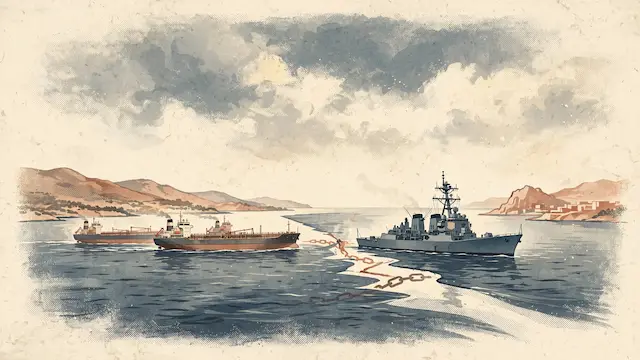
Iran is reportedly devising a provocative operation to break the U.S. naval blockade, as its control over shipping through the Strait of Hormuz, a key pressure point on the global energy market, diminishes. This situation is underscored by recent statements from Mohsen Rezaei, Secretary of the Supreme National Security Council and a close confidant of Supreme Leader Mojtaba Khamenei. Rezaei revealed he has been ordered by Khamenei to end Iran's state of "neither peace nor war" swiftly. Foreign Minister Abbas Araghchi has also confirmed Tehran's intention to breach the blockade.
The Iranian strategy, apparently moving into practical implementation, involves a two-phase approach. First, Tehran plans to send a convoy of oil tankers to China. If the U.S. Navy attempts to intercept or attack these vessels, Iran threatens to strike the oil and gas infrastructure of neighboring states. This tactic aims to pressure Washington through Arab Gulf nations while simultaneously triggering a sharp rise in global oil and gas prices. The ultimate goal is to hinder a potential U.S.-Israeli military operation and force U.S. President Donald Trump into negotiations from a weaker position.
Tehran seeks to achieve multiple objectives: partially breaking the economic blockade to replenish state coffers (Kpler estimates Iran's oil and condensate export revenues could reach zero by mid-December, while tanker passage could yield billions), transforming the blockade from an Iranian problem into a regional one by threatening neighboring states' oil exports, and presenting Washington with a difficult choice. Allowing the tankers through would undermine the blockade's credibility and be a propaganda victory for Tehran, while stopping them risks escalation and Iranian retaliation.
The U.S. Central Command (CENTCOM) has several options to stop the tankers, including direct attacks, which could cause an environmental catastrophe and energy price spikes, or boarding operations using thousands of Marines. However, such boarding could be complicated by the presence of armed IRGC fighters, similar to difficulties faced by Israeli special forces during the 2010 Mavi Marmara incident.
Keep up with
Mentioned
The same event, reported separately by each outlet. Open a few to compare what different newsrooms emphasize — and what they leave out.
Centre 1Right 1Other 1


Not the same event — other stories that share this one’s people, places, or theme: background, reactions, and follow-ups.