
Israel's Economic Growth Fails to Boost Household Budgets Amid High Costs
Translated & summarized from Cursorinfo by baba
Israel's economy is growing with rising salaries and slowing inflation, but the high cost of living prevents citizens from feeling the improvement. Despite GDP per capita growth of 4.33% and average salaries reaching 14,156 shekels, essential expenses like housing, food, and utilities continue to increase. Structural issues such as low market competition and the impact of war-related costs contribute to the persistent affordability crisis, leaving many Israelis struggling financially.
The story in 6 lines · by baba
- Israel's economy shows strong growth with 4.33% GDP per capita increase, but citizens don't feel richer.
- Average salaries rose to 14,156 shekels, and inflation slowed to 1.1% in October.
- Essential costs like housing, utilities, and groceries continue to rise, negating salary gains.
- Housing costs increased 4.2% in the past year, impacting household budgets significantly.
- Purchasing power parity adjusted GDP per capita ranks Israel 24th among OECD countries.
- Low market competition is a key structural reason for Israel's high cost of living.
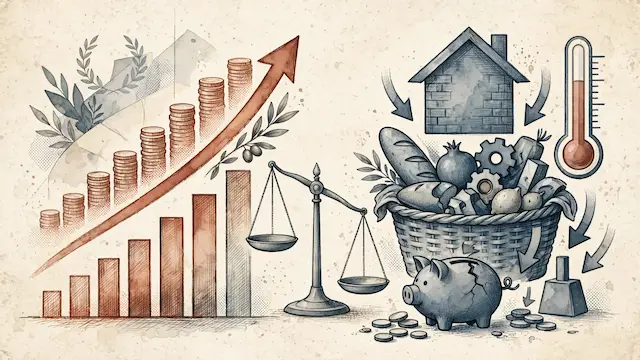
Despite strong economic growth and rising salaries, Israelis are not feeling the benefits due to the country's persistently high cost of living. In the first nine months of 2026, GDP per capita grew by 4.33%, salaries continued to increase, and inflation slowed to 1.1%. However, Israel remains one of the most expensive developed nations.
While per capita consumption rose 2.6% and spending on durable goods surged 14.4%, essential goods and services remain unaffordable. The average monthly salary reached 14,156 shekels in September, up 3.8% year-on-year, with unemployment at a low 3.1%. Inflation in October dropped to 1.1%, nearing the Bank of Israel's target range of 1-3%.
However, the slowdown in price increases does not reverse previous sharp price hikes. For instance, a 100 shekel item that rose to 120 shekels and then increased by 1% still costs more than before. While prices for clothing, footwear, furniture, home goods, transport, communication, and some food items have decreased, essential expenses like fruits, vegetables, medical services, education, entertainment, and housing costs continue to rise.
Housing remains a significant issue, with the housing component of the consumer price index up 4.2% in the past year, representing 26.8% of the average urban household's basket. War-related damage and increased demand for protected rooms (Mamads) have impacted costs, though property purchase prices have fallen 1.5%.
Resumed international travel by Israelis, with over 910,000 departing in October, has shifted consumer spending abroad, potentially easing domestic price pressures. Despite preliminary Q3 GDP growth of 8% (4% adjusted for overseas company production), nominal GDP per capita is around $71,247, but adjusted for purchasing power parity, it's about $60,000, ranking Israel 24th among OECD countries.
Structural issues like insufficient market competition contribute to high prices, meaning currency strength and cheaper imports don't always translate to lower consumer prices. Increased competition among suppliers and retailers is needed. The high cost of rent, utilities, and groceries disproportionately affects families, overshadowing positive economic indicators and limiting their financial well-being.



