
Israel's Economy Grows, But High Cost of Living Hinders Real Gains
Translated & summarized from Cursorinfo by baba
Israel's economy is experiencing robust growth, with rising GDP per capita and wages, and slowing inflation. However, a high cost of living, particularly housing, significantly reduces its international ranking when adjusted for purchasing power. Columnist Shlomo Maoz highlights this disparity, noting that while nominal GDP is strong, real purchasing power places Israel 24th among OECD nations. Experts suggest structural reforms are needed to lower living costs and ensure economic gains are widely felt.
The story in 5 lines · by baba
- Israel's economy shows strong growth, but high living costs place it 24th in OECD purchasing power parity rankings.
- Nominal GDP per capita is high, but adjusted for purchasing power, it drops significantly, impacting citizens' real gains.
- Inflation has slowed to 1.1% annually, the lowest since April 2021, but housing costs continue to rise.
- Average monthly salary reached 14,156 shekels, and unemployment remains low at 3.1%.
- Columnist Shlomo Maoz suggests structural reforms are needed to address the high cost of living over the next decade.
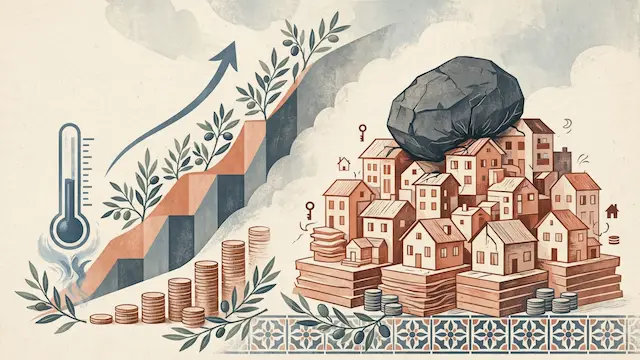
Israel's economy is showing significant growth, with GDP per capita, real wages, and consumer confidence on the rise, while inflation slows. However, the high cost of living in the country significantly impacts its international standing, placing it 24th in OECD rankings when adjusted for purchasing power parity, despite a strong nominal GDP per capita.
According to columnist Shlomo Maoz, Israel's nominal GDP per capita reached $56,500, placing it in the top ten of the OECD. Yet, after accounting for the cost of goods and services, this figure drops to approximately $60,000 when adjusted for purchasing power parity, causing the country's position to fall to 24th.
For the first nine months of 2026, Israel's GDP per capita increased by 4.33% year-over-year, with the standard of living rising by 2.6%. The average monthly salary reached 14,156 shekels by September, a 3.8% nominal increase, and unemployment remained low at 3.1%. Inflation slowed to 1.1% annually by October, the lowest since April 2021, falling within the Bank of Israel's target range of 1-3%.
Despite the overall inflation slowdown, housing costs remain a significant burden, with the housing component of the consumer basket increasing by 4.2% annually. Maoz attributes the discrepancy between positive economic indicators and the public's perception of high costs to these housing expenses, as well as other factors like trade barriers and insufficient competition. He suggests that the next government should focus on reducing the cost of living over the next decade by dismantling cartels, increasing competition, and simplifying imports.
International travel has also shifted consumer spending patterns, with Israelis increasingly spending abroad following the resumption of international flights. In October 2026, over 910,000 passengers used air transport, a 15.7% increase from the previous year. Consumer confidence improved to 104 points, outperforming several European countries.
Mentioned


