
Israel's "Change Bloc" Faces Deepening Crisis as Government Formation Deadline Looms
Translated & summarized from Al-Shams by baba
Gadi Eisenkot faces a critical deadline to form a new Israeli government amidst deep divisions within the "Change Bloc" over coalition partners and political formulas. Naftali Bennett favors a unity government, Avigdor Lieberman supports including ultra-Orthodox parties, and Eisenkot is considering a minority government. The negotiations are complicated by the potential influence of two lawmakers from Lieberman's party. Failure to reach a compromise before the mandate expires could mean the "Change Bloc" misses its chance to unseat Prime Minister Benjamin Netanyahu.
The story in 6 lines · by baba
- Gadi Eisenkot faces a critical deadline to form a new Israeli government.
- The "Change Bloc" is divided on coalition partners and political formulas.
- Naftali Bennett wants a unity government, while Avigdor Lieberman favors including ultra-Orthodox parties.
- Gadi Eisenkot is considering the formation of a minority government.
- Two lawmakers from Avigdor Lieberman's party may hold decisive influence.
- Failure to compromise could result in the "Change Bloc" missing its chance to unseat Benjamin Netanyahu.
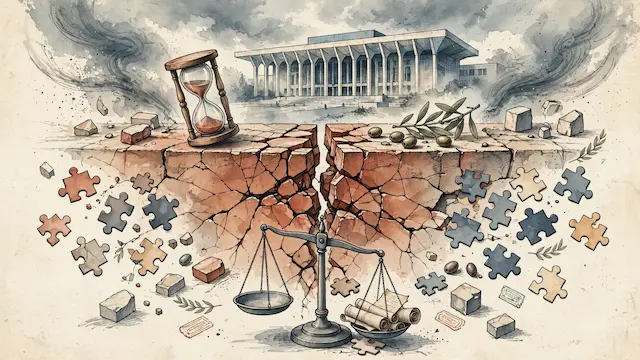
Efforts to form a new government in Israel are encountering increasing obstacles, with deep divisions among the leaders of the "Change Bloc" concerning potential partners and the political formula needed to secure a parliamentary majority and end Benjamin Netanyahu's tenure. As the deadline for Gadi Eisenkot to form the government approaches, his room for maneuver is shrinking, while the involved parties remain entrenched in their positions without reaching common ground. According to an analysis by the analyst in the newspaper "Maariv," Eisenkot faces several political options but has yet to secure his partners' approval for any, despite holding the mandate to form the government and the Knesset speakership within the current political landscape.
The disagreements within the bloc center on the nature of the incoming coalition. Naftali Bennett advocates for continuing efforts to establish a unity government, while Avigdor Lieberman believes that including the ultra-Orthodox parties is the most suitable path to an agreement. Eisenkot himself has not ruled out forming a minority government as one of the available alternatives. The analyst notes that while these multiple options allow for continued dialogue, they do not necessarily hasten an agreement, given each leader's adherence to their preferred formula. Overcoming these differences, she suggests, requires at least one party to be willing to accept a compromise that does not fully align with its original vision.
Lieberman's party's stance is among the factors that could influence the negotiations. The analyst points out that two of his party's lawmakers might hold decisive influence over the approval of proposed measures, despite Lieberman's firm political position and apparent unwillingness to alter his vision for the next government. This impacts not only the negotiations among the bloc's leaders but also parliamentary calculations regarding the necessary votes for any government formula.
With Eisenkot's mandate nearing its end, the bloc's leaders have little time left for further scenario discussions without making decisions. They must now determine a formula that can gain agreement and identify which parties are prepared to provide parliamentary support, even if it requires concessions. The analyst identifies the core of the crisis as the willingness to retract prior positions, stating that the success of the government change efforts depends not only on presenting political plans but also on the ability of their proponents to agree on a shared option. If disagreements persist without mutual concessions, the mandate could expire without a new government being formed, potentially squandering the "Change Bloc's" opportunity to unseat Netanyahu and end his rule.
Mentioned



