
Israel's 'Change Bloc' Faces Political Poker Game Amidst Coalition Uncertainty
Translated & summarized from Maariv by baba
Israel's "change bloc" faces a complex political challenge in forming a coalition government after recent elections, with only 48 Knesset mandates. Despite Prime Minister Benjamin Netanyahu's failure to secure a majority, the opposition is described as being in a worse position. The author advocates for a minority government supported by Arab parties and criticizes the current political maneuvering. Key figures like Avigdor Lieberman and Naftali Bennett are central to the coalition talks, with the ultimate responsibility falling on Gadi Eisenkot to unite the bloc and make critical decisions for the nation's future.
The story in 6 lines · by baba
- Israel's "change bloc" secured only 48 Knesset mandates, complicating coalition formation after recent elections.
- Prime Minister Benjamin Netanyahu is considered the primary loser, failing to form a government.
- Avigdor Lieberman's stance on a minority government is seen as crucial but has been contradictory.
- The author advocates for a minority government supported by Arab parties from the outside.
- Gadi Eisenkot is urged to lead the "change bloc" and enforce unified decisions.
- Failure to form a government is warned to have severe consequences for Israel's future.
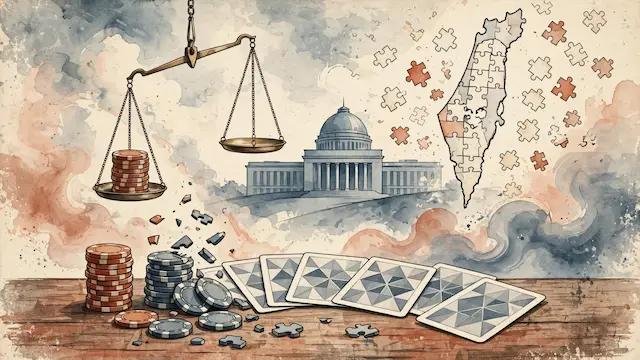
Despite no clear winner in the recent elections, Prime Minister Benjamin Netanyahu is seen as the primary loser, failing to form a government. The "change bloc," comprising four leaders, has secured only 48 mandates in the Knesset, making coalition building a significant challenge. The bloc's leaders have been criticized for a lack of unified action and strategy, with internal disagreements and perceived missteps hindering progress. For instance, Benny Gantz's visit to Netanyahu's office was labeled a "terror attack" by some within the bloc, while Avigdor Lieberman's stance against a minority government was called a "suicide attack."
The article suggests that the current situation is just the beginning of a complex political process, emphasizing the need for patience, determination, and luck. The opposition's position is described as worse than the "change bloc's," with Netanyahu himself reportedly expressing uncertainty about his political future. The author posits that Netanyahu might lose not only control of the parliament but also his position as Prime Minister.
The author advocates for forming a minority government supported by Arab parties from the outside, arguing that removing Netanyahu and his associates from power is an urgent necessity. The article criticizes the current leadership of the Shin Bet and highlights what it calls a "crazy jihad" against Matan Kahana as evidence of the nature of their opponents. The Likud party's suspension of coalition talks with Eisenkot's party is seen as a tactic to buy time and exploit potential divisions within the "change bloc."
Avigdor Lieberman is identified as a key figure whose decisions will significantly impact coalition formation. His public statements have been contradictory, expressing both certainty in forming a government and opposition to a minority government. The author speculates that Lieberman might be banking on the possibility of Haredi parties switching allegiances, as they lack a viable alternative on the other side. However, the author questions Lieberman's strategy of publicly ruling out a minority government, which could increase the Haredi parties' demands.
Despite the political deadlock, some progress has been made, including the replacement of the Knesset Speaker with Matan Kahana and the establishment of committees to review legislative changes. The article also notes the inclusion of Arab representatives in key committees, a development that has been a feature of previous Netanyahu governments. The author dismisses concerns about foreign influence, particularly from Qatar, in the elections, suggesting that such claims are unfounded and that the focus should remain on forming a stable government.
The author concludes by stressing the critical nature of the current moment, urging the "change bloc" leaders to overcome their internal disputes and unite. Failure to do so, the article warns, will have severe consequences for the country and will be a lasting stain on their political careers. The responsibility is placed on Gadi Eisenkot to lead the bloc and enforce decisions, emphasizing that the stakes are not personal ambition but the future of Israel.
Mentioned


