
Court Battle Erupts Over Destroying Homes in Kfar Aza Where Israelis Were Murdered
Translated & summarized from Channel 13 by baba
Families of victims of the October 7th attack have petitioned Israel's High Court of Justice to prevent the demolition of homes in Kibbutz Kfar Aza where their loved ones were murdered. They argue the houses should be preserved as sacred memorials. The court heard the petition on Tuesday, with the families describing themselves as refugees whose homes were destroyed.
The story in 5 lines · by baba
- Families of October 7th victims are fighting to preserve Kfar Aza homes as memorials.
- Israel's High Court of Justice heard a petition regarding the demolition of the homes.
- The homes in question are located in the "Dor Yachad" neighborhood of Kfar Aza.
- Petitioners describe themselves as refugees whose homes were burned.
- The dispute centers on preserving sites of remembrance versus rebuilding.
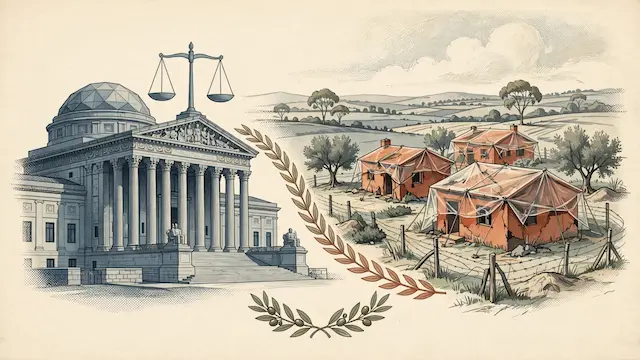
A legal battle has reached Israel's Supreme Court, known as the High Court of Justice (Bagatz), concerning the fate of homes in Kibbutz Kfar Aza that were damaged during the October 7th Hamas attacks. Families of those murdered and fallen in the kibbutz are petitioning against a decision by kibbutz members to demolish the soot-stained houses in the "Dor Yachad" neighborhood, where their loved ones were killed. The petitioners argue that these homes should be preserved as sacred memorial sites. The High Court heard the petition on Tuesday. The families describe themselves as "refugees" whose homes were burned, emphasizing the deep emotional and symbolic significance of these locations as places of remembrance.
The dispute highlights the complex emotional and practical challenges faced by communities in southern Israel in the aftermath of the October 7th massacre. While some residents may wish to rebuild and move forward, others seek to preserve the sites of tragedy as memorials to the victims. The court's decision will have implications for how such sites are treated in other communities affected by the conflict.
The same event, reported separately by each outlet. Open a few to compare what different newsrooms emphasize — and what they leave out.
Left 1Centre 2Right 2Other 1






Not the same event — other stories that share this one’s people, places, or theme: background, reactions, and follow-ups.
