
Israel Railways to Triple Jerusalem-Tel Aviv Train Frequency During Peak Hours
Translated & summarized from Walla by baba
Israel Railways will increase train frequency on the high-speed Jerusalem-Tel Aviv line to three trains per hour during peak times starting November 29, utilizing a new signaling system. The Yitzhak Navon station in Jerusalem will also receive a new entrance soon, though platform access remains an issue. Future plans include extending the line to the Khan station with new underground stops. Service frequency will also be boosted on lines to Netanya, Modi'in, and Hadera.
The story in 5 lines · by baba
- Jerusalem-Tel Aviv train frequency will triple to three trains per hour during peak times starting November 29.
- The service upgrade is enabled by the new ETCS Level 2 signaling system, enhancing safety and capacity.
- A new entrance to Jerusalem's Yitzhak Navon station is expected to open in the coming weeks.
- Future plans include extending the high-speed line to the Khan station with two new underground stops.
- Train frequency will also increase on lines serving Netanya, Modi'in, and Hadera.
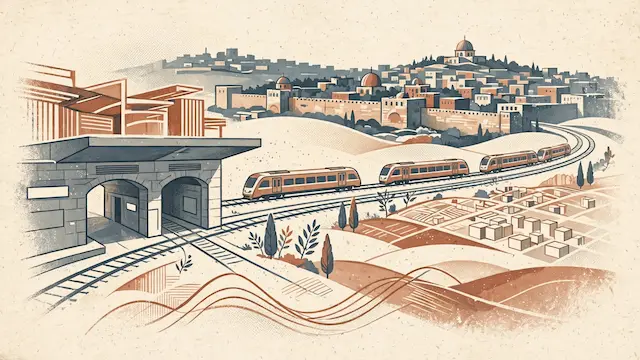
Israel Railways will increase the frequency of trains on the high-speed line between Jerusalem and central Israel to three trains per hour during peak times, starting November 29. This marks the first increase in service since the line's opening in 2018. The enhanced schedule, which will operate between 6-9 AM and 3-7 PM, aims to reduce long wait times at the Yitzhak Navon station in Jerusalem, which currently handles over 70,000 passengers on busy days. The upgrade is made possible by the implementation of the new ETCS Level 2 signaling system, which allows for increased train frequency on existing tracks while improving safety and accuracy. This advanced technology is being deployed on the Jerusalem line first and is slated for future implementation on other routes, including the Ayalon corridor.
In the coming weeks, a new entrance to the Yitzhak Navon station will open near the Supreme Court and the Shazar parking lot, intended to improve passenger flow. However, this will not resolve congestion related to the descent from the station's middle level to the platforms due to a shortage of elevators.
Looking ahead, Israel Railways plans to extend the high-speed line to the historic Khan station with two new underground stations, "Jerusalem Central" and "Jerusalem Khan," expected to open in the early 2030s. These extensions aim to better distribute passengers across the city and provide direct access to the city center.
Alongside the Jerusalem-Tel Aviv line improvements, train frequency will also increase on other lines. Netanya will see five trains per hour during peak times. The Jerusalem Yitzhak Navon-Modi'in line will add two morning trains between 7-9 AM. Minor schedule adjustments will occur at Hadera West station to improve service, and two additional passenger trains will run between Jerusalem Yitzhak Navon and Hadera between 5-6 AM.
Mentioned
The same event, reported separately by each outlet. Open a few to compare what different newsrooms emphasize — and what they leave out.
Centre 6Right 2Haredi 1Other 5















Not the same event — other stories that share this one’s people, places, or theme: background, reactions, and follow-ups.
