
US Midterm Losses Signal Shifting Western Approach to Israel
Translated & summarized from Arab48 by baba
The US midterm election results suggest a potential shift in Western policy towards Israel, questioning its long-held exceptional status and exemption from accountability. While domestic issues dominated the election, the war in Iran and US support for Israel were also debated. Trump's decision to cut annual military aid, though maintaining other cooperation, signals evolving US political calculations. This trend, coupled with growing public criticism and European actions against settlements, indicates a widening gap between Israel's image and its practices, potentially transferring the political and ethical costs of its policies to its allies.
The story in 5 lines · by baba
- US midterm election results raise questions about Israel's privileged status and exemption from accountability.
- Trump's decision to halt annual military aid to Israel signals evolving US political calculations.
- Growing public criticism and European actions against settlements indicate a widening gap in Israel's image.
- The Palestinian issue is gaining prominence in American public discourse, impacting political stances.
- Israel may be transferring the political and ethical costs of its policies to its allies.
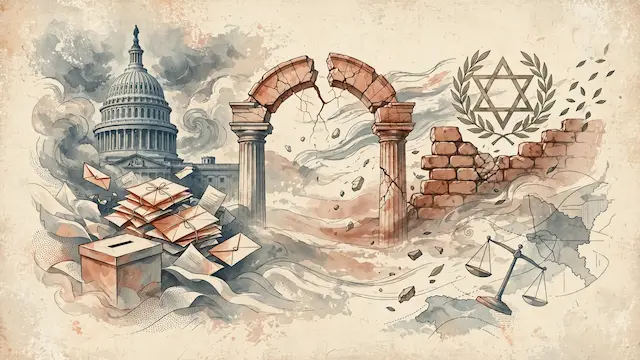
The defeat of Republicans in the US midterm elections carries implications for Israel's privileged status in Western policy, raising questions about whether the nation is losing its strategic protection and relative exemption from accountability. Analysts suggest this could signal an attempt to reorder relations, balancing allied interests with the political cost of maintaining Israel's exceptionalism. While domestic factors like the economy and cost of living were primary drivers of the Republican loss, the war with Iran and its impact on Washington's standing, alongside unwavering US support for Israel, were also part of the electoral debate.
Although a strategic shift in the US-Israel relationship is premature, accumulating indicators suggest its continuation under previous terms requires scrutiny from both the US and its Western allies. This comes amid growing public discourse and politicians' diminishing ability to defend policies to a changing electorate. Trump's announcement on the day of Israel's recent elections to halt annual military aid, while maintaining arms sales and security cooperation, transcends its financial value, revealing evolving US political calculations. This move appears aimed at altering the public perception of this support while preserving its strategic structure, potentially shifting the cost of the alliance from overt to less visible military and industrial arrangements.
The complexity deepens with the Iranian file, which Netanyahu has sought to leverage politically. The Iranian threat, a cornerstone of his security rhetoric, was typically used to bolster his political standing. However, Trump's calculations appear more intricate post-midterms and amid rising domestic objections to the cost of foreign wars, suggesting disagreements may focus on the timing, scope, and expense of confronting Iran rather than the threat itself.
The rise of progressive voices, including Senator-elect Abdel Rahman Al-Siddiq, despite pro-Israel lobby opposition, indicates the growing prominence of the Palestinian issue in American public discourse. Critiques of Israeli policies are no longer necessarily impediments to legislative access. This trend, though limited and varying by state, points to a potential electoral cost for politicians regarding their stances on Israel, an ethical and legal cost due to diminished justification for its policies, and a strategic cost yet to fully materialize.
Israel may lose the battle for public image while retaining influence in political, military, and economic institutions. However, attributing these shifts solely to Netanyahu obscures a deeper crisis: the contradiction between Israel's democratic image and the reality of occupation and settlements predates him, though his policies and the Gaza war have amplified its exposure in Western societies. The gap between Israel's declared image and its actual practices is narrowing. This exposure has extended beyond social spheres, with European public and university movements prompting governmental questions about the application of their stated principles to Israel. French measures, like barring settlement leader Yossi Dagan, and other European actions targeting settlements, reflect a widening gap between traditional protection and increasing demands for accountability.
Despite the decline of the Israeli narrative, the power protecting it may persist. There is a distinction between losing the ability to persuade and losing the ability to influence, and between shifts in public opinion and changes in state policies. Western and US governments might move past Netanyahu politically without revising the terms that have enabled the Israeli project's expansion or its supporting military and economic structures. The Palestinian question, therefore, is linked to leveraging these shifts through a political project that capitalizes on growing dissent from various social elites to transform solidarity into influence and ethical accountability into political and legal commitments. The paradox is that Israel, once shielded by Western exceptionalism, is now transferring the political and ethical costs of this status to its allies, without entirely losing its protective tools. The space between the declining ability to justify policies and the continued ability to protect them defines a crisis extending beyond Netanyahu to the nature of the Western relationship with the Israeli project itself, prompting a reevaluation of the terms of its exceptionalism or an attempt to reproduce it with less costly methods.
Mentioned


