
European Aviation Grapples With Bomb Threats Amid Security Weaknesses
Translated & summarized from Globes by baba
Dozens of European flights have been disrupted by anonymous bomb threats, leading to unscheduled landings and fighter jet escorts, though no explosives have been found. Experts like Eitan Ben-David suggest these incidents expose potential weaknesses in European aviation security compared to stricter Israeli protocols. Speculation on the perpetrators includes state actors like Russia or Iran, as well as copycat individuals, with significant financial costs incurred from the disruptions.
The story in 6 lines · by baba
- Dozens of European flights were disrupted by anonymous bomb threats, leading to unscheduled landings and fighter jet escorts.
- No explosives were found on any of the affected flights, raising questions about disproportionate responses.
- Former Israeli security official Eitan Ben-David cited potential weaknesses in European ground security protocols.
- Speculation on the source of threats includes Russia, Iran, terrorist groups, and copycat individuals.
- The disruptions have incurred significant financial costs for airlines and airports across Europe.
- Israeli airlines' stricter security measures may be a factor in why their flights have not been similarly affected.
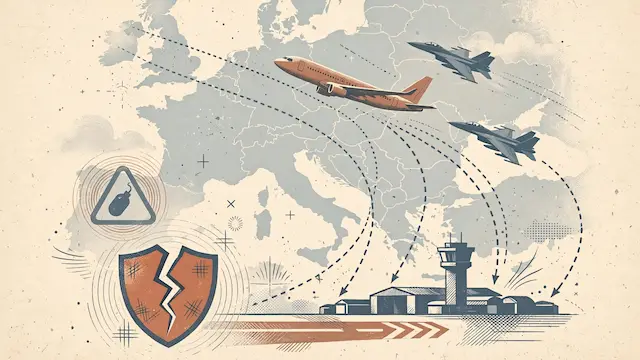
A wave of bomb threats has disrupted dozens of commercial flights across Europe in recent weeks, prompting unscheduled landings and fighter jet escorts. Incidents have affected flights from airlines like Wizz Air, LOT, SAS, and Ryanair, with multiple planes being diverted or subjected to thorough checks. Despite these extensive security measures, no explosives have been found in any of the cases, raising questions about the disproportionate response to anonymous threats.
Eitan Ben-David, former head of the Counter-Terrorism Bureau and a senior Shin Bet official, described the situation as a form of terrorism where the perpetrators face low risk due to anonymity. He noted that while emails can sometimes be traced, threats communicated indirectly, such as through media outlets, present a significant challenge. Ben-David highlighted that European airlines' automatic responses to such threats might indicate weaknesses in their ground security protocols, contrasting them with the more stringent procedures typically employed by Israeli and American carriers.
Speculation about the source of these threats ranges from state actors like Russia, aiming to create chaos in Europe, to Iran, known for its hybrid warfare tactics, or even terrorist organizations and individuals. Matthew Borie, Chief Intelligence Officer at Osprey Flight Solutions, suggested a possible Russian angle but also pointed to Iran's activities. Ben-David added that a "copycat effect" is also evident, where individuals or groups are motivated by the success of previous threats.
The incident involving a Flydubai flight in late September is considered by some to have potentially inspired subsequent threats, including a bomb alert on a Delta flight in Tel Aviv. This event, along with others, has heightened global aviation security awareness but also may have emboldened potential perpetrators. The economic impact of these disruptions is substantial, with each diverted flight potentially costing millions of euros due to delays, security checks, and subsequent operational disruptions.
Despite the disruptions, Israeli passengers have shown less concern, partly due to the perceived stricter security measures of Israeli airlines. Ben-David emphasized that a robust ground security system is crucial to mitigating the impact of such threats. He suggested that increased transparency regarding the apprehension of those responsible would serve as a deterrent, ultimately leading to the cessation of these incidents when the professional community demonstrates a lack of reaction to the threats.
Mentioned
Not the same event — other stories that share this one’s people, places, or theme: background, reactions, and follow-ups.
