
Israel Cracks Down on Unnecessary Car Horn Use with Fines Up to 1000 Shekels
Translated & summarized from Cursorinfo by baba
Tel Aviv will begin fining drivers for unnecessary car horn use starting in early 2027, with penalties ranging from 250 to 1000 shekels. The city is installing advanced noise and camera detection systems to combat severe noise pollution. This initiative follows unsuccessful attempts at other methods and is already operational in Petah Tikva, which reported a 25% decrease in noise complaints. Several other Israeli cities are considering similar measures.
The story in 5 lines · by baba
- Tel Aviv will fine drivers for unnecessary car horn use starting in Q1 2027, with penalties up to 1000 shekels.
- Specialized noise sensors and cameras will identify offending vehicles, with human inspectors making final decisions.
- The fines aim to reduce severe noise pollution, a growing problem in the busy city.
- Petah Tikva already uses a similar system, reporting a 25% reduction in noise complaints.
- Other Israeli cities, including Jerusalem and Ramat Gan, are considering similar noise-reduction initiatives.
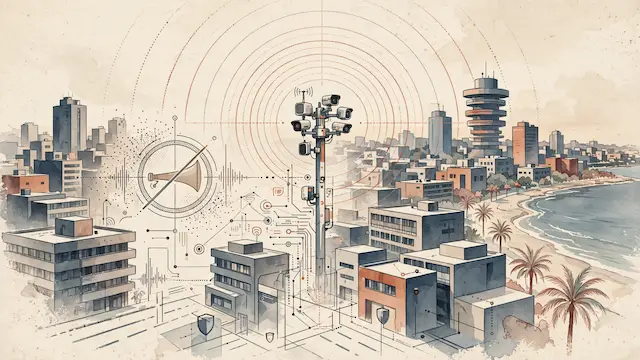
Tel Aviv is set to implement a new system starting in the first quarter of 2027 to penalize drivers for the unjustified use of car horns. The city will install specialized equipment featuring noise sensors and video cameras at busy intersections to identify offending vehicles. Fines will range from 250 to 1000 shekels, depending on the vehicle type and whether the offense is repeated. Initially, 11 automated control points will be deployed. Municipal inspectors will review recordings to determine if a violation occurred, with the system aimed at combating severe noise pollution in the city.
The fine structure varies: a first offense for a private car owner is 250 shekels, a second is 500 shekels. For company cars, the first offense is 500 shekels, and a repeat offense is 1000 shekels. These rules apply to most transport, including buses and delivery vehicles, with exceptions for emergency services. Companies may also be fined for repeated violations by their employees.
The technology, developed by Israeli company NOiez in collaboration with QIS, uses acoustic sensors and cameras to pinpoint the source of the sound. A special algorithm creates a "sound heat map" to identify the vehicle. A human inspector will make the final decision on issuing a ticket, ensuring that drivers are not penalized in ambiguous situations, according to developer Shachar Keinan.
The first two locations for the new equipment will be the intersection of Bugrashov and Chernikhovsky streets and Rabin Square. Future locations will be chosen based on resident complaints, population density, and pedestrian traffic. Drivers will be notified of the equipment's presence through warning signs.
Meital Lehavi, Tel Aviv's Deputy Mayor for Transportation, stated that previous measures like warning signs and awareness campaigns were ineffective. Pilot tests of a similar system were conducted near Dizengoff Center about two years ago. Petah Tikva already operates a similar system, issuing around 100 fines monthly and reporting a 25% reduction in noise complaints in affected areas. Petah Tikva is also considering using the technology for noisy motorcycles.
Other Israeli cities, including Jerusalem and Ramat Gan, are exploring similar projects with support from the Ministry of Environmental Protection. NOiez anticipates installing an additional 40-50 systems nationwide. Developers claim that in areas where fines have been implemented, unnecessary honking has decreased by approximately 70%. Persistent traffic noise is linked to sleep disturbances, stress, and increased blood pressure, and can even cause accidents by startling drivers or pedestrians. Research also suggests a 1% decrease in property value for every decibel increase in ambient noise.
Mentioned
The same event, reported separately by each outlet. Open a few to compare what different newsrooms emphasize — and what they leave out.
Centre 1Other 2


Not the same event — other stories that share this one’s people, places, or theme: background, reactions, and follow-ups.



