
Israelis Refinance Mortgages Amid Belief Interest Rates Will Fall
Translated & summarized from Ice by baba
Israelis are taking out nearly 9.3 billion shekels in new mortgages, driven by refinancing and past contractor deals. A significant shift towards Prime Rate-linked loans, now at 28%, indicates public belief that interest rates will fall. This cautious approach stems from past experiences with volatile interest rate changes and a recognition of Israel's economic and security uncertainties.
The story in 5 lines · by baba
- Israelis have taken out nearly 9.3 billion shekels in new mortgages, data shows.
- Mortgage refinancing is a key driver, with people switching from 5.5% to 4.5% interest rates.
- The share of Prime Rate-linked mortgages has risen to 28%, up from 6.2% a year ago.
- Public expectation of falling interest rates is influencing mortgage choices.
- Past experiences with volatile interest rates have made the public more cautious.
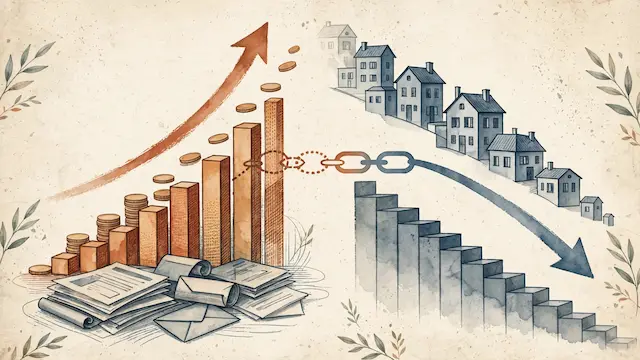
Data from the Bank of Israel reveals a surge in mortgage activity, with Israelis taking out loans totaling nearly 9.3 billion shekels. This increase, despite a general slowdown in the housing market, is attributed to several factors. A primary driver is mortgage refinancing, as individuals with existing loans at 5.5% interest are opting to replace them with new ones at 4.5%, even with potential bank fees. Another significant factor relates to past real estate deals, particularly those involving contractors before new banking regulations limiting financing benefits took effect in 2024. While contractor deals were common, their marketing has shifted from pre-contract details to prominent advertising, reflecting a change in market sentiment.
The public's expectation that interest rates will continue to decline is influencing mortgage choices. This is evident in a shift towards Prime Rate-linked mortgage tracks, whose share has risen from 26% to 28%. Conversely, inflation-linked tracks now represent only 8%, suggesting a public belief in both falling interest rates and rising prices in Israel. This trend contrasts with October 2024, a year after the war began, when the Prime Rate's share was only 6.2%. The current increase marks a 4.5-fold rise from that low point, though still below the peak of 39%.
This behavior presents a perceived contradiction: if the public anticipates rising living costs, it might deter interest rate decreases. However, many are focusing on short to medium-term financial strategies, acknowledging Israel's susceptibility to macroeconomic and security shifts. Recalling the drastic interest rate changes experienced previously, such as the shift from near-zero rates in early 2022 to record highs, has made the public more cautious and calculated in their financial decisions, reflecting a nuanced view of the Israeli economy.
Mentioned



