
Israel Mandates Larger, Better-Equipped Safe Rooms Amid Housing Changes
Translated & summarized from Cursorinfo by baba
Israel is expanding mandatory protected rooms (MAMADs) to 15 square meters, including showers and toilets, to enhance safety during escalations. While this presents technical and financial challenges for developers, it also offers increased commercial value for apartments. Some companies are already implementing the larger MAMADs in new projects, though buyer awareness and demand are still developing. Appraisers suggest these enhanced rooms could increase property values by around 5%.
The story in 6 lines · by baba
- Israel is expanding protected rooms (MAMADs) to 15 square meters with added amenities like showers and toilets.
- The change aims to improve comfort and safety for residents during prolonged military escalations.
- Integrating larger MAMADs poses technical and financial challenges for developers, especially in high-rise buildings.
- Expanded MAMADs are expected to increase apartment values by approximately 5%, particularly in high-demand areas.
- Buyer awareness of the enhanced MAMADs is still developing, with wider adoption anticipated in 5-10 years.
- MAMADs are increasingly becoming a basic requirement for Israeli homebuyers.
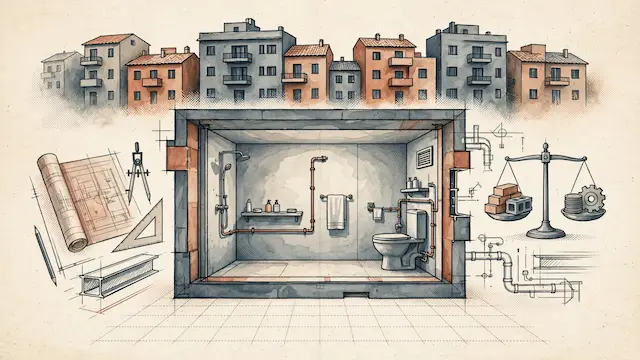
Israel is updating its building codes to expand protected rooms, known as MAMADs, to 15 square meters and equip them with showers, toilets, and small kitchenettes. This change, driven by recent prolonged military escalations that highlighted the need for more comfortable and secure spaces during rocket attacks, allows developers to increase the size and amenities of these vital rooms. The amendment to the Planning and Building Law is already influencing new housing projects, though it presents technical and financial challenges.
Architects are re-evaluating existing designs, with some finding it difficult to integrate the larger MAMADs, especially in high-rise buildings, due to constraints with engineering systems and space. In some cases, expanded MAMADs are only feasible in a portion of the apartments, or require floor expansions that necessitate additional municipal approvals. Developers sometimes opt to forgo the upgrades to meet construction deadlines.
Despite the complexities, the larger MAMADs offer financial benefits, potentially increasing a project's commercial appeal and value, particularly in high-demand areas like central Israel where prices per square meter are substantial. Architect Yoav Michael noted that the added space can improve a project's economic performance and financial flexibility with banks. Some companies, like Prashkovsky Menivim, are already incorporating these larger MAMADs into new developments and plan to do so in all future projects, viewing them as valuable additions for everyday living, not just emergencies.
However, the market's reception is still developing. While developers see the appeal, Roni Cohen of Eldar Marketing Real Estate suggests that most buyers still prioritize the basic presence of a MAMAD or a communal protected space. Awareness of the enhanced MAMADs is not yet widespread, and their adoption is expected to be gradual, likely becoming more common in larger apartments over the next five to ten years. The increased construction costs may limit their inclusion in smaller, more affordable units.
Real estate appraisers estimate that an expanded MAMAD could increase an apartment's value by approximately 5%, depending on location and finishes. Oshri Aarony emphasizes that the functional utility of the space is key, making apartments more attractive and potentially speeding up sales. He also points out that MAMADs are becoming a baseline requirement for Israeli homebuyers, with expectations for enhanced features likely to grow.
Mentioned
The same event, reported separately by each outlet. Open a few to compare what different newsrooms emphasize — and what they leave out.
Centre 1Other 1
