
New Knesset Sworn In Amid Political Tensions and Calls for Unity
Translated & summarized from NEWSru Israel by baba
The 26th Knesset was sworn in on November 10, with 120 members taking their oath, including 46 newcomers. President Herzog urged lawmakers to prevent new elections, while Prime Minister Netanyahu called for a unity government but opposed including Arab parties. The ceremony was marked by political clashes, including Itamar Ben-Gvir's outburst and Gadi Eisenkot's cancellation of coalition talks after Netanyahu's speech.
The story in 6 lines · by baba
- The 26th Knesset, comprising 120 members, was sworn in on November 10.
- President Herzog urged lawmakers to avoid further elections.
- Prime Minister Netanyahu called for a national unity government but opposed Arab party participation.
- MK Elisha Madan, who lost legs in Gaza, took his oath on prosthetics and received applause.
- Itamar Ben-Gvir received a warning for shouting during the Joint List chairman's oath.
- Gadi Eisenkot canceled coalition talks with Likud following Netanyahu's speech.
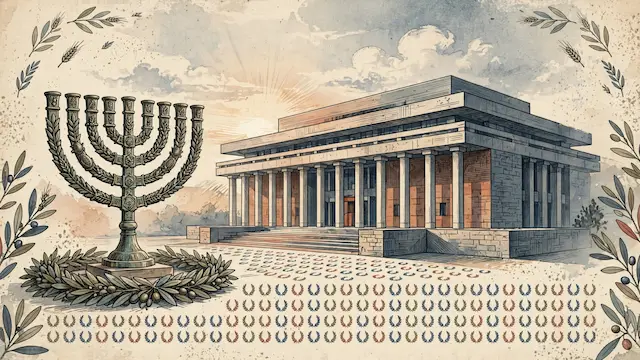
The 26th Knesset was sworn in on Tuesday, November 10, with all 120 members taking their oath of office. Of these, 46 are newly elected. The ceremony was attended by President Isaac Herzog, Prime Minister Benjamin Netanyahu, Knesset Speaker Amir Ohana, and Chief Justice Yitzhak Amit.
President Herzog urged the new lawmakers to do everything possible to avoid further elections. Speaker Ohana also emphasized the need to overcome societal divisions and use the new parliament's opening to foster national unity.
During the ceremony, MK Elisha Madan, who lost both legs in Gaza three years prior, took his oath on prosthetics despite pain and bleeding, receiving a standing ovation. In contrast, Itamar Ben-Gvir, leader of Otzma Yehudit, received a warning from the Speaker for shouting "Who is he swearing allegiance to? Hamas?" during the oath of the Joint List's chairman, Yusuf Jabarin.
Prime Minister Netanyahu called for a national unity government to confront the country's threats. However, he strongly opposed the inclusion of Arab parties, accusing them of seeking to establish their own state on the ruins of the Jewish state. This statement led to some Arab party members and Yair Golan, leader of the Democratic Party, walking out of the plenum.
Further disruption occurred when Naftali Bennett, leader of the Bayahad party, interrupted Netanyahu's speech with questions regarding the October 7th investigations and Netanyahu's Qatari advisors. The exchange escalated with interjections from Ben-Gvir and others, causing significant noise in the hall.
Following Netanyahu's divisive speech, Gadi Eisenkot, leader of the Yahad party, canceled scheduled coalition talks with Likud, stating that Netanyahu's address turned the solemn ceremony into a political confrontation and demonstrated a disregard for state institutions. Eisenkot's party also announced the submission of several key bills, including one for a state commission to investigate the October 7th events and another to limit the prime minister's term.
Mentioned
The same event, reported separately by each outlet. Open a few to compare what different newsrooms emphasize — and what they leave out.
Left 1Centre 7Right 3Haredi 3Arab 4Other 5
























Not the same event — other stories that share this one’s people, places, or theme: background, reactions, and follow-ups.


