
Iran Unveils New Underground Missile City Amid Escalating Tensions
Translated & summarized from Kikar HaShabbat by baba
Iran's Revolutionary Guards have unveiled a new underground missile facility, showcasing ballistic missiles and launchers. This move is part of a strategy to transfer missile production to protected subterranean "cities" to ensure continued manufacturing even under attack. Israeli assessments indicate Iran has over 1,700 ballistic missiles capable of reaching Israel, though its arsenal has decreased due to recent operations and strikes. Iran is actively rebuilding its missile industry and moving infrastructure to underground sites.
The story in 5 lines · by baba
- Iran's Revolutionary Guards revealed a new underground missile facility with ballistic missiles and launchers.
- The facility is part of Iran's strategy to move missile production to protected subterranean "cities".
- Iran possesses over 1,700 ballistic missiles capable of reaching Israel, according to Israeli assessments.
- The missile arsenal has decreased due to recent operations and strikes by Israel and the US.
- Iran is rebuilding its missile industry and transferring infrastructure to underground sites.
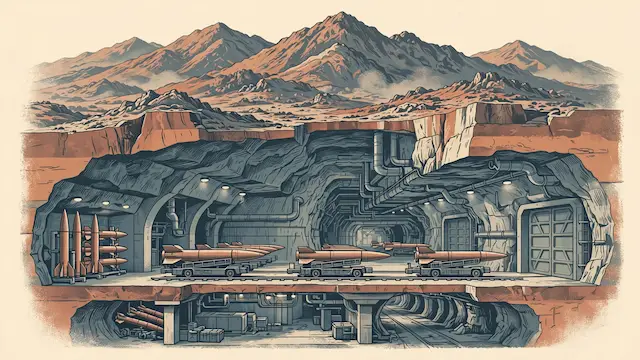
Amid reports of American and Israeli preparations for potential military conflict, Iran's Revolutionary Guards (IRGC) have revealed a new underground missile facility. The unveiling, intended to showcase Iran's military capabilities and readiness for further conflict, featured ballistic missiles, cruise missiles, and launchers housed within the subterranean complex. The ceremony was attended by IRGC Chief of Staff Ali Abdollahi and IRGC Air Force Commander Seyed Majid Mousavi.
This new facility is part of a broader Iranian strategy to bolster its missile program. Last week, IRGC spokesperson Hossein Mohabbi stated that Iran is rapidly transferring missile and drone production lines from surface facilities to underground sites. He explained that Iran is now establishing underground "cities" for missile production, not just storage in tunnels and bunkers. Mohabbi asserted that Iran's domestic knowledge, vast territory, and decentralized production infrastructure would enable continued missile and drone manufacturing even under heavy bombardment, aiming to deter attacks on its production and storage sites.
Iranian officials aim to demonstrate resilience against further strikes. They are investing in protected infrastructure to ensure continued production, storage, and operation of weapon systems during any future military campaign. This move highlights Tehran's efforts to maintain its missile capabilities despite significant losses.
According to Israeli security assessments from November 3, Iran possesses over 1,700 ballistic missiles capable of reaching Israel, a decrease of about 800 missiles compared to pre-war estimates. This reduction is attributed to missile launches in recent military operations and destruction of missiles in attacks by Israel and the United States. Iran is simultaneously working to rebuild its military industry and reinforce damaged facilities, reportedly restoring some missile production and assembly capabilities by moving infrastructure to fortified underground sites.
Israeli and American estimates suggest that over 200 of Iran's approximately 400 ballistic missile launchers were destroyed during the recent conflict. However, some remaining launchers were stored in underground facilities and have resumed operations after access points, blocked by attacks, were reopened.
Mentioned
The same event, reported separately by each outlet. Open a few to compare what different newsrooms emphasize — and what they leave out.
Haredi 1Other 1

Not the same event — other stories that share this one’s people, places, or theme: background, reactions, and follow-ups.