
Satellite Images Reveal Iran Expanding Underground Missile Facilities
Translated & summarized from Kikar HaShabbat by baba
Satellite images from November reveal Iran is excavating new underground missile facilities near major bases in Karaj and Shahroud, alongside repairs to damaged military sites. Analysts suggest this is a strategic move to protect infrastructure from further attacks, potentially expanding existing missile bases or creating new storage. The activity aligns with U.S. claims of significant damage to Iran's military industry, though Iran asserts it maintains a large missile stockpile. Speculation is growing about potential renewed U.S. strikes.
The story in 6 lines · by baba
- Satellite images show Iran excavating new underground missile facilities near Karaj and Shahroud.
- Repairs are underway at 12 military sites damaged by U.S. and Israeli strikes.
- Analysts believe Iran is moving production underground to protect facilities from attacks.
- The U.S. claims to have destroyed up to 90% of Iran's drone, missile, and naval industry.
- Iran asserts it has a large missile stockpile and has shown missiles emerging from tunnels.
- Speculation is increasing about potential renewed U.S. strikes against Iran.
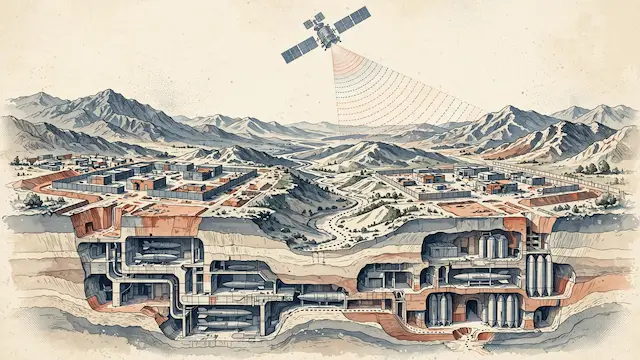
Satellite images from November show extensive excavation and construction near two major missile bases in Iran, alongside repairs at at least 12 military sites damaged by American and Israeli strikes, according to an analysis by BBC Verify. The images reveal new digging and structures at the Garmdareh military base near Karaj, approximately 40 kilometers west of Tehran, and at the Shahroud base in Semnan province, about 400 kilometers northeast of the capital. Analysts from the British intelligence firm MAIAR, who reviewed the photos, pointed to significant activity. At the Karaj base, numerous construction vehicles are visible at a dig site, with improvements also noted at a nearby air force base. Researcher Sam Lair of the FPRI Institute suggests this indicates a "new gateway to an underground facility." Analysis by Janes points to a new facility under construction, featuring tunnel entrances and buildings, possibly an expansion of damaged missile bases or a storage facility. At the Kermanshah missile base in western Iran, new roofs have been built over destroyed structures. In the Parchin complex, about 30 kilometers southeast of Tehran, damaged buildings and debris have been cleared. At the Talukan 2 facility within the complex, significant work has been completed: buildings were demolished, and damage to an underground bunker was repaired and reinforced with concrete. Near the city of Qom, close to the Fordow uranium enrichment facility, new construction and excavation were observed outside tunnel entrances. The findings align with U.S. claims of severe damage to Iranian capabilities, with a Pentagon spokesperson stating the U.S. destroyed "up to 90% of Iran's industry base for drones, ballistic missiles, and naval vessels." Iran, however, claims to possess a large missile stockpile and recently broadcast footage of missiles emerging from underground tunnels. Speculation about renewed U.S. strikes has intensified in recent weeks, with security and intelligence sources estimating that the U.S. and Iran are actively preparing for a potential resumption of hostilities, as American military presence in the region increases daily.
Mentioned
Not the same event — other stories that share this one’s people, places, or theme: background, reactions, and follow-ups.
